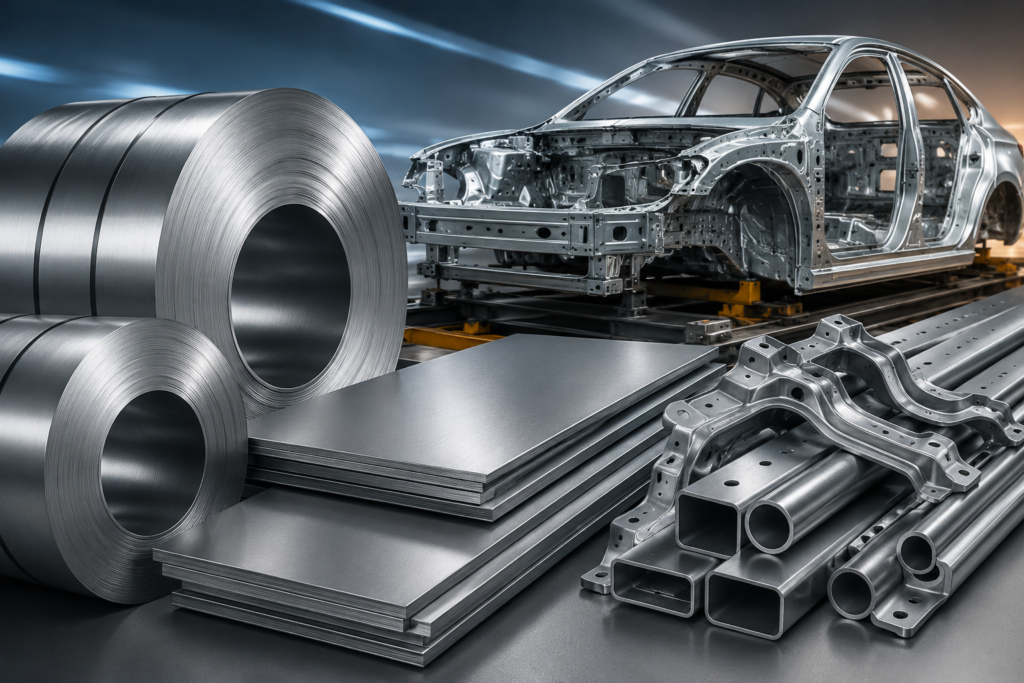
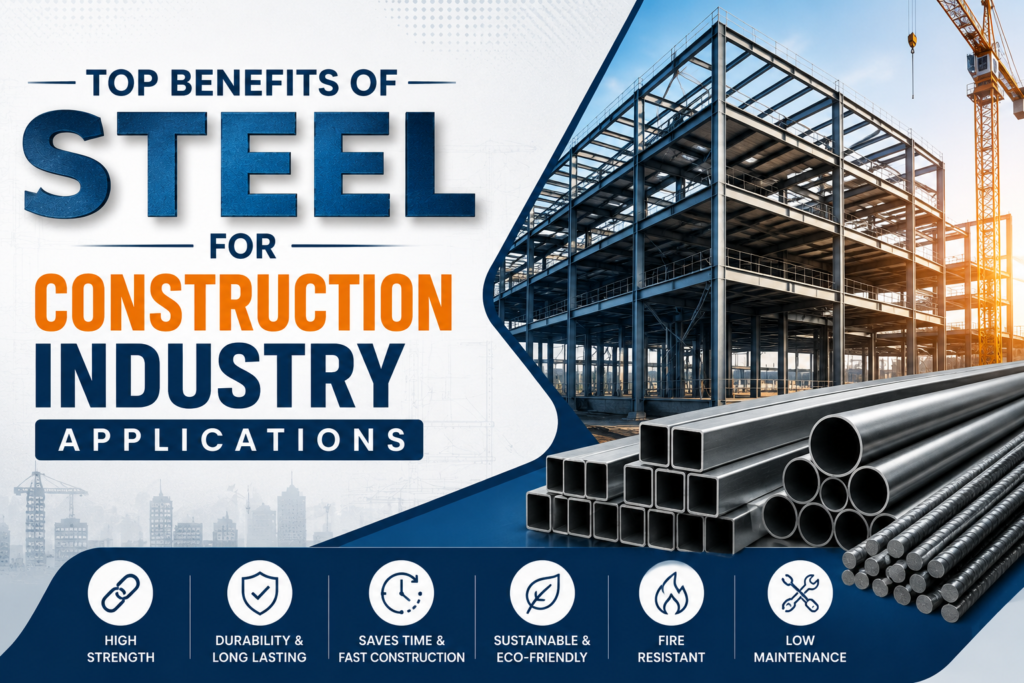
Steel for Construction Industry applications is widely preferred because it offers exceptional strength, durability, design flexibility, sustainability, and cost efficiency. From commercial buildings and industrial facilities to bridges and infrastructure projects, steel helps create safer, stronger, and longer-lasting structures. Products such as Steel Tubes for Fabrication and Steel Pipes for Industrial Use further enhance construction performance by providing reliable structural support and efficient material utilization.
The construction industry continues to evolve as developers, engineers, and contractors seek materials that can meet the demands of modern infrastructure. Whether constructing high-rise buildings, industrial facilities, transportation networks, or residential projects, material selection directly impacts safety, durability, project timelines, and long-term costs.
Among all construction materials, steel remains one of the most trusted and widely used options worldwide. Its exceptional mechanical properties, versatility, and sustainability have made it an essential component of modern construction projects.
At Vardhman Steel Tubes, we understand how critical quality steel products are to successful construction outcomes. This article explores the key benefits of Steel for Construction Industry applications and explains why steel continues to play a central role in shaping modern infrastructure.
Why Steel is Essential for Modern Construction
The global construction sector increasingly relies on steel because it delivers an unmatched combination of strength and flexibility.
Unlike traditional building materials, steel can support large loads while maintaining structural integrity. This makes it suitable for projects ranging from warehouses and commercial complexes to bridges and industrial plants.
Key reasons why steel is preferred include:
- High strength-to-weight ratio
- Long service life
- Fast construction timelines
- Design flexibility
- Sustainability benefits
- Low maintenance requirements
These advantages make Steel for Construction Industry applications a practical solution for modern infrastructure development.
Strength and Structural Reliability
One of the biggest advantages of steel is its superior strength.
Steel structures can withstand:
- Heavy loads
- Extreme weather conditions
- High wind pressure
- Seismic activity
- Dynamic operational stress
This makes steel ideal for commercial buildings, industrial facilities, airports, stadiums, and transportation infrastructure.
Practical Example
Modern skyscrapers rely heavily on steel frameworks because steel provides the structural strength needed to support significant heights while maintaining safety and stability.
For industrial projects, Steel Pipes for Industrial Use often serve as key structural and transportation components due to their durability and load-bearing capabilities.
Faster Construction Timelines
Project completion speed has become increasingly important in today’s competitive construction market.
Steel components are typically manufactured with precise dimensions before arriving at the construction site. This reduces on-site fabrication and accelerates installation.
Benefits include:
- Reduced labor requirements
- Faster project completion
- Improved project scheduling
- Lower construction costs
Pre-engineered steel systems allow contractors to complete projects more efficiently while maintaining high quality standards.
Design Flexibility and Versatility
Architects and engineers value steel because it supports innovative and complex designs.
Steel can be fabricated into various shapes and configurations without compromising structural integrity.
This flexibility allows construction professionals to create:
- Large open spaces
- Long-span structures
- Modern architectural designs
- Industrial facilities
- Customized infrastructure solutions
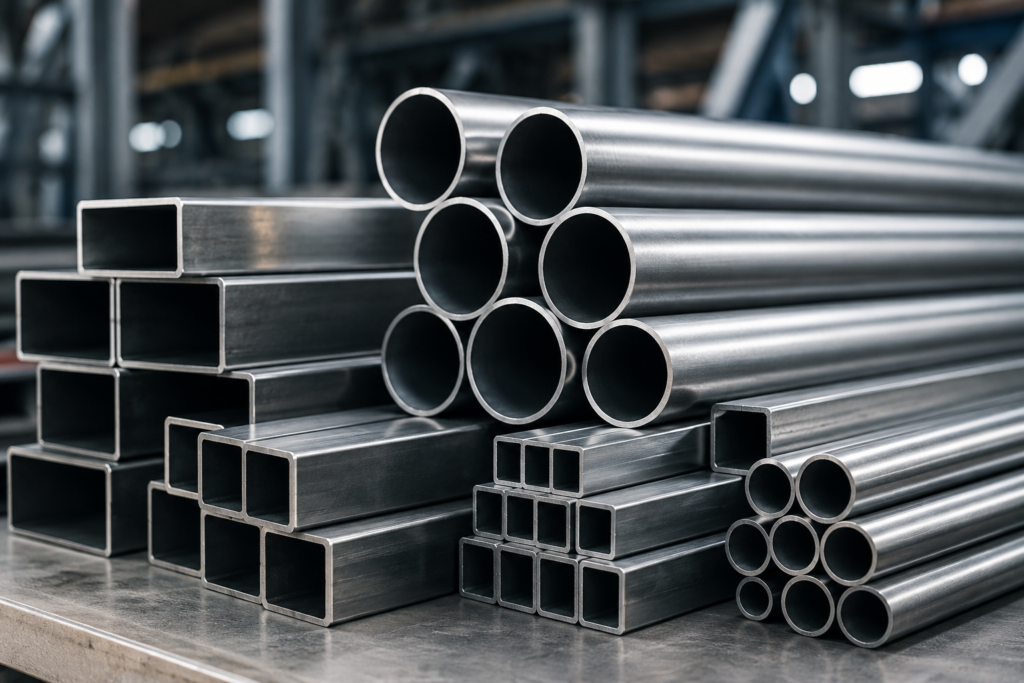
Steel Tubes for Fabrication are particularly useful in projects requiring precision-engineered frameworks and specialized structural components.
Durability and Long-Term Performance
Durability remains a key factor when selecting construction materials.
Steel structures are known for their long service life and ability to withstand demanding environmental conditions.
Advantages include:
Corrosion Protection
Modern steel products can be galvanized or coated to resist corrosion.
Fire Resistance
Engineered steel systems can be designed to meet strict fire safety standards.
Pest Resistance
Unlike wood-based materials, steel is not vulnerable to termites, insects, or biological deterioration.
These characteristics help reduce maintenance costs throughout a structure’s lifespan.
Sustainability and Environmental Benefits
Sustainability has become a major focus in the construction industry.
Steel supports environmentally responsible building practices because it is highly recyclable.
Environmental Advantages of Steel
| Sustainability Feature | Benefit |
| Recyclability | Reduces waste |
| Long Lifespan | Minimizes replacement needs |
| Resource Efficiency | Supports sustainable construction |
| Lower Waste Generation | Improves project sustainability |
Industry studies consistently rank steel among the world’s most recycled materials, making it a valuable choice for green building initiatives.
Steel Tubes for Fabrication in Construction Projects
Steel Tubes for Fabrication have become increasingly important in modern construction.
Their precision, strength, and versatility make them suitable for numerous applications, including:
- Structural frameworks
- Industrial platforms
- Support systems
- Architectural structures
- Equipment housing systems
Benefits of Steel Tubes
- High dimensional accuracy
- Easy fabrication
- Excellent weldability
- Strong load-bearing performance
- Efficient material utilization
These characteristics help construction companies improve productivity while maintaining structural quality.
Role of Steel Pipes for Industrial Use
Steel Pipes for Industrial Use serve critical functions in both industrial and infrastructure projects.
They are commonly used for:
- Water transportation
- Gas distribution
- Industrial process systems
- Structural applications
- Utility infrastructure
Why Industrial Steel Pipes Matter
Industrial facilities require materials capable of operating under pressure, temperature fluctuations, and continuous usage.
Steel pipes provide:
- Mechanical strength
- Corrosion resistance
- Long-term reliability
- Operational safety
This makes them indispensable in manufacturing plants, power stations, refineries, and infrastructure projects.
Economic Benefits of Steel Construction
While material selection should prioritize quality, project economics remain important.
Steel offers several cost advantages:
Reduced Labor Costs
Prefabricated steel components simplify installation and reduce labor requirements.
Lower Maintenance Expenses
Durable steel structures require fewer repairs over time.
Improved Lifecycle Value
Long service life contributes to better overall return on investment.
Material Efficiency
The high strength-to-weight ratio allows engineers to optimize material usage without sacrificing performance.
These economic benefits help developers achieve better project outcomes while managing budgets effectively.
Emerging Trends Driving Steel Demand
Several industry trends continue to increase demand for Steel for Construction Industry applications.
Smart Cities Development
Urban expansion requires durable infrastructure and advanced building systems.
Industrial Growth
Manufacturing and logistics facilities increasingly rely on steel-based construction.
Sustainable Building Practices
Green building certifications often encourage the use of recyclable materials such as steel.
Infrastructure Modernization
Governments worldwide continue investing in transportation, utilities, and public infrastructure projects.
These developments reinforce steel’s importance in future construction activities.
How to Choose the Right Steel Products
Selecting the appropriate steel products requires careful evaluation.
Consider the following factors:
Project Requirements
Determine load-bearing, durability, and environmental requirements.
Product Quality
Choose products manufactured according to recognized industry standards.
Supplier Expertise
Work with experienced manufacturers capable of providing technical support.
Long-Term Performance
Focus on lifecycle value rather than simply comparing initial costs.
Partnering with trusted suppliers helps ensure project success and reliable structural performance.
Why Choose Vardhman Steel Tubes?
When it comes to sourcing steel tubes and pipes for construction, infrastructure, and industrial projects, choosing the right supplier matters as much as choosing the right material. Here’s why builders, contractors, and engineers trust Vardhman Steel Tubes:
1. Uncompromising Quality Standards
Every batch of steel tubes we supply undergoes strict quality checks — from raw material sourcing to final inspection — ensuring consistent strength, durability, and performance on every project.
2. Wide Product Range
From MS pipes and GI tubes to hollow sections and specialized steel pipes, we offer a comprehensive range to meet diverse construction and industrial requirements under one roof.
3. Reliable Sourcing Network
We source our steel from [trusted/certified manufacturers], giving you the assurance of quality backed by dependable supply chains — so your project timelines stay on track.
4. Timely Delivery
We understand that construction schedules can’t afford delays. Our well-organized logistics and inventory management ensure your materials reach site on time, every time.
5. Competitive Pricing
Quality doesn’t have to come at a premium. We offer industry-competitive pricing without cutting corners on material standards.
6. Experienced Team & Technical Support
Our team brings [X years] of industry expertise, helping clients select the right grade, size, and specification of steel tubes for their specific application.
7. Client-Centric Approach
We build long-term relationships, not just transactions — offering after-sales support, easy replacements, and responsive customer service.
Conclusion
Steel continues to be the backbone of modern construction because it delivers the strength, durability, flexibility, and sustainability required by today’s infrastructure projects. From commercial buildings and industrial facilities to transportation networks and public infrastructure, Steel for Construction Industry applications provide dependable performance and long-term value.
Products such as Steel Tubes for Fabrication and Steel Pipes for Industrial Use further enhance construction efficiency by supporting structural integrity, fabrication precision, and operational reliability.
As the demand for sustainable and high-performance construction materials grows, steel will remain one of the most important building materials for future development. Vardhman Steel Tubes is committed to supporting this growth by providing quality steel solutions designed to meet evolving industry requirements.
Contact Us
Looking for reliable steel solutions for your next construction project?
Contact us today to discuss your requirements and explore our range of premium steel products.
Visit us to learn more about our steel solutions for construction, fabrication, and industrial applications.
FAQs
1. Why is steel important in the construction industry?
Steel provides exceptional strength, durability, flexibility, and sustainability, making it ideal for modern construction projects.
2. What are Steel Tubes for Fabrication used for?
Steel tubes are commonly used for structural frameworks, industrial platforms, support systems, and customized fabrication applications.
3. Where are Steel Pipes for Industrial Use commonly applied?
They are widely used in manufacturing plants, utility systems, water transportation, gas distribution, and industrial processing facilities.
4. Is steel environmentally friendly for construction?
Yes. Steel is highly recyclable, durable, and supports sustainable construction practices.
5. How does steel reduce overall construction costs?
Steel accelerates project completion, lowers maintenance requirements, reduces labor costs, and provides long-term lifecycle value.