Blog

CRC Pipes for Industrial Equipment Manufacturing

High-Quality CRC Pipes for Industrial Equipment Manufacturing Solutions

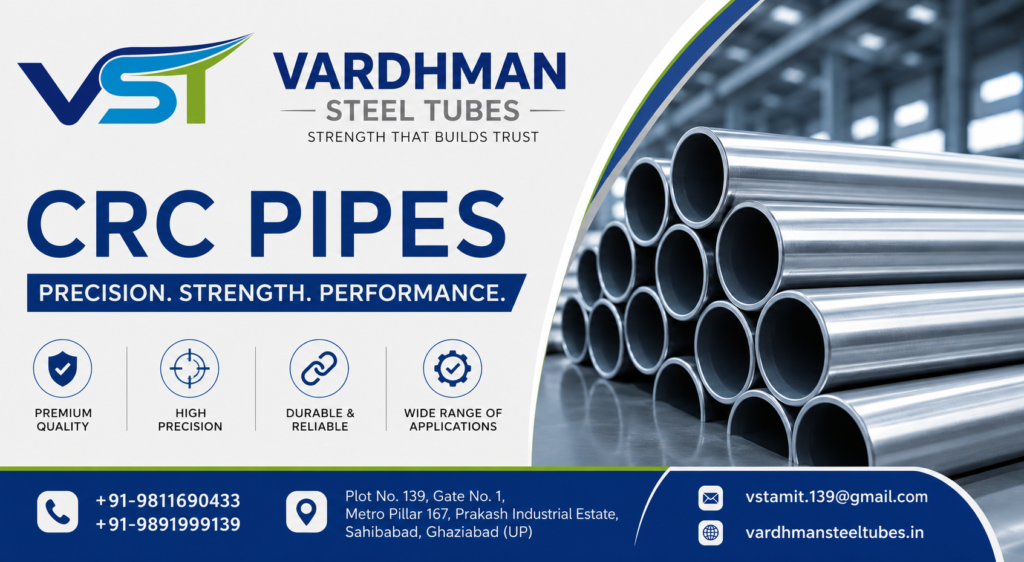
Industrial equipment manufacturing requires strong, durable, and precision-engineered materials to ensure long-term operational efficiency. Among the many materials used across industries, CRC pipes have become an essential component for manufacturing reliable industrial equipment. Their superior strength, smooth finish, corrosion resistance, and dimensional accuracy make them highly suitable for modern industrial applications. CRC Pipes for Industrial Equipment Manufacturing are widely used in sectors such as automotive, construction, engineering, agriculture, heavy machinery, and fabrication industries. Manufacturers today prefer CRC pipes because they provide excellent performance under demanding operating conditions while maintaining structural stability. Vardhman Steel Tubes is recognized as a trusted supplier of high-quality CRC pipes designed to meet the evolving needs of industrial equipment manufacturing. With a strong focus on quality, innovation, and customer satisfaction, the company delivers reliable steel solutions for various industrial sectors. Understanding CRC Pipes CRC pipes, also known as Cold Rolled Close Annealed pipes, are manufactured using cold rolled steel that undergoes advanced processing techniques to improve strength, surface finish, and precision. The cold rolling process enhances the mechanical properties of steel while providing better dimensional consistency compared to standard steel pipes. These pipes are known for their smooth surface, high tensile strength, and excellent formability, making them ideal for industrial equipment manufacturing applications where precision and durability are critical. CRC Pipes for Industrial Equipment Manufacturing are commonly used in equipment structures, machinery components, support systems, frames, and fabrication projects due to their superior performance characteristics. Importance of High-Quality CRC Pipes in Industrial Manufacturing Industrial equipment operates under harsh environments involving pressure, vibration, heat, moisture, and continuous mechanical stress. The quality of materials used directly impacts equipment durability, safety, and operational efficiency. Using low-grade steel pipes can lead to structural failures, corrosion issues, increased maintenance costs, and reduced equipment lifespan. This is why industries increasingly depend on premium-grade CRC pipes that can handle demanding industrial conditions effectively. Vardhman Steel Tubes provides CRC pipes manufactured under strict quality standards to ensure dependable performance for industrial applications. Advantages of CRC Pipes for Industrial Equipment Manufacturing Superior Strength and Durability One of the key advantages of CRC Pipes for Industrial Equipment Manufacturing is their exceptional strength. Industrial machinery and equipment require materials capable of handling heavy loads and continuous operational stress. CRC pipes provide enhanced tensile strength and structural integrity, making them suitable for equipment frames, support structures, and engineering applications. Their durability ensures long-term performance even in challenging industrial environments. Excellent Surface Finish CRC pipes have a smooth and polished surface finish that improves their overall appearance and functionality. This smooth finish allows easy coating, painting, and fabrication processes, which are essential for industrial manufacturing. The refined surface quality also reduces the chances of rust formation and improves resistance against environmental damage. High Dimensional Accuracy Precision is crucial in industrial equipment manufacturing. Even small dimensional variations can affect assembly performance and machinery operation. CRC pipes are manufactured with accurate thickness and uniform dimensions, ensuring consistency throughout production. This helps manufacturers achieve precise fabrication and smooth assembly operations. Corrosion Resistance Industrial equipment is often exposed to moisture, chemicals, and harsh operating environments that can cause corrosion. CRC pipes offer better corrosion resistance compared to ordinary steel pipes. This resistance helps improve the lifespan of industrial equipment while reducing maintenance and replacement costs. Industries operating in humid or chemically exposed environments especially benefit from CRC pipe applications. Easy Fabrication and Welding CRC pipes are highly suitable for fabrication and welding applications. Their excellent formability allows manufacturers to cut, bend, shape, and weld the pipes efficiently according to project requirements. This flexibility makes CRC Pipes for Industrial Equipment Manufacturing highly preferred for custom engineering solutions and industrial structures. Applications of CRC Pipes in Industrial Equipment Manufacturing CRC pipes are widely used across various industrial sectors because of their reliability and performance. Their applications continue to expand as industries seek durable and efficient manufacturing materials. Machinery Manufacturing Industrial machines require strong support structures and precision components. CRC pipes are commonly used in machine frames, conveyor systems, and structural assemblies due to their strength and stability. Automotive Equipment Automotive manufacturing industries use CRC pipes for equipment structures, tooling systems, and fabrication applications. Their precision and smooth finish make them ideal for high-quality automotive production processes. Construction Equipment Heavy construction machinery and industrial tools depend on durable steel components. CRC pipes provide the structural support needed for equipment used in demanding construction environments. Agricultural Equipment Agricultural machinery operates under harsh outdoor conditions and continuous mechanical stress. CRC pipes help improve the durability and reliability of farming equipment and support structures. Material Handling Systems Industrial warehouses and manufacturing plants use CRC pipes in material handling systems such as racks, storage units, and conveyor support structures. Why Industries Prefer Vardhman Steel Tubes Choosing the right steel supplier is essential for ensuring product quality and long-term industrial performance. Vardhman Steel Tubes has established itself as a reliable manufacturer and supplier of premium-quality CRC pipes for various industrial applications. The company focuses on advanced manufacturing processes, quality assurance, and customer satisfaction to deliver superior steel solutions. Industries trust Vardhman Steel Tubes because of its commitment to: The company continuously works to meet the growing demands of modern industries by offering CRC Pipes for Industrial Equipment Manufacturing that comply with industry standards and performance expectations. Role of CRC Pipes in Modern Industrial Development Industrial development today depends heavily on durable and efficient infrastructure. From automated manufacturing plants to heavy engineering industries, reliable steel materials are essential for supporting operational productivity. CRC pipes contribute significantly to industrial growth by enabling manufacturers to build stronger, safer, and more efficient equipment systems. Their durability and precision support high-performance operations while minimizing downtime and maintenance requirements. As industries continue to modernize and adopt advanced technologies, the demand for premium CRC pipes is expected to increase further. Sustainability and Efficiency Benefits Modern industries are increasingly focusing on sustainability and operational efficiency. CRC pipes support these goals through their long service life and reduced maintenance requirements. Durable materials help reduce waste generation, lower replacement frequency,

High-Quality CRC Pipes for Industrial Equipment Manufacturing Solutions Read More »

CRC Steel for Automotive Industry

How CRC Steel for Automotive Industry Improves Vehicle Durability

The automotive industry depends heavily on materials that offer strength, durability, safety, and long-term performance. Among the many materials used in vehicle manufacturing, CRC steel has become one of the most important due to its superior quality and reliability. CRC Steel for Automotive Industry applications plays a major role in enhancing the durability and structural integrity of modern vehicles. From body panels to structural components, automotive manufacturers rely on cold rolled steel for precision and consistent performance. Vardhman Steel Tubes has emerged as a trusted name in delivering premium-grade CRC steel products designed to meet industrial and automotive standards. With increasing demand for lightweight yet durable vehicles, the importance of CRC Steel for the Automotive Industry continues to grow. Understanding CRC Steel in the Automotive Industry CRC steel, also known as Cold Rolled Close Annealed steel, is manufactured through a process where hot rolled steel is further processed at room temperature. This process improves surface finish, dimensional accuracy, and mechanical properties. Compared to traditional steel, CRC steel offers enhanced strength and a smoother finish, making it ideal for automotive manufacturing. Automotive companies prefer CRC steel because it delivers high tensile strength without compromising flexibility. These characteristics are essential for producing durable vehicles that can withstand varying environmental and road conditions. Why Vehicle Durability Matters Vehicle durability directly affects safety, maintenance costs, and overall performance. Consumers today expect automobiles to last longer while maintaining fuel efficiency and structural reliability. Automakers continuously search for materials that can improve vehicle lifespan without adding unnecessary weight. CRC Steel for Automotive Industry applications supports these goals by providing superior resistance to wear, corrosion, and impact. This allows manufacturers to produce vehicles capable of handling long-term use under demanding conditions. How CRC Steel Enhances Vehicle Strength One of the primary reasons CRC steel is widely used in the automotive sector is its exceptional strength. Modern vehicles require materials that can absorb impact energy during collisions while maintaining structural stability. CRC steel offers improved hardness and tensile properties, making it suitable for critical automotive parts such as: The strength provided by CRC Steel for Automotive Industry applications contributes significantly to passenger safety and overall vehicle durability. Improved Corrosion Resistance Corrosion is one of the biggest challenges faced by vehicles, especially in areas with high humidity, rain, or road salt exposure. Rust can weaken metal components and reduce vehicle lifespan. CRC steel undergoes advanced finishing processes that improve its resistance to corrosion. Its smooth surface also allows better coating and painting adhesion, creating an extra protective barrier against environmental damage. Automotive manufacturers prefer CRC steel because it helps maintain the appearance and structural quality of vehicles for longer periods. This directly improves customer satisfaction and reduces maintenance requirements. Better Surface Finish for Automotive Components Modern vehicles require visually appealing designs along with functional durability. CRC steel provides a smooth and uniform surface finish that makes it ideal for exterior automotive panels and decorative parts. The refined surface quality allows manufacturers to achieve better paint finishes and precise fabrication. This helps create vehicles with enhanced aesthetics while maintaining durability and strength. Vardhman Steel Tubes supplies high-quality CRC steel products that meet the precision requirements of automotive manufacturing industries. Contribution to Lightweight Vehicle Design Fuel efficiency and emission reduction are major priorities in the automotive sector. Manufacturers are increasingly focusing on lightweight vehicle designs to improve mileage and comply with environmental standards. CRC Steel for Automotive Industry applications helps reduce vehicle weight while maintaining structural performance. Its high strength-to-weight ratio allows manufacturers to use thinner sections without sacrificing durability. Lightweight vehicles provide several benefits, including: The use of advanced CRC steel solutions supports the automotive industry’s transition toward sustainable and energy-efficient transportation. Precision Manufacturing Advantages Automotive production requires extremely accurate dimensions and consistent material quality. CRC steel is known for its excellent dimensional accuracy and uniform thickness, making it ideal for precision engineering applications. The cold rolling process ensures tight tolerances, which helps manufacturers reduce production errors and improve assembly efficiency. This precision is especially important for automated automotive production lines. Vardhman Steel Tubes focuses on delivering CRC steel products with high consistency and quality standards to support industrial manufacturing needs. Enhanced Safety Performance Safety remains one of the most critical aspects of automobile manufacturing. Vehicle structures must protect passengers during collisions and absorb impact energy effectively. CRC steel contributes to vehicle safety through its superior strength and energy absorption properties. High-strength steel components help maintain cabin integrity during accidents, reducing the risk of severe injuries. Automotive engineers use CRC Steel for Automotive Industry applications in strategically important structural areas to improve crash performance and passenger protection. Durability in Harsh Driving Conditions Vehicles operate under a wide range of environmental and mechanical stresses. Heat, vibration, rough roads, and heavy loads can gradually weaken automotive components. CRC steel offers excellent durability under challenging operating conditions. Its mechanical stability and fatigue resistance help automotive parts maintain long-term performance. This durability is especially valuable for commercial vehicles, heavy-duty transportation, and industrial automotive applications where reliability is essential. Applications of CRC Steel in Automotive Manufacturing CRC steel is widely used in various automotive components because of its versatility and performance benefits. Common applications include: Body Panels CRC steel provides excellent surface finish and formability, making it ideal for vehicle body panels and exterior parts. Structural Components High-strength CRC steel supports vehicle frames, reinforcements, and safety structures. Exhaust Systems Its resistance to heat and corrosion makes CRC steel suitable for exhaust and underbody components. Seat Structures Automotive seating systems require strong yet lightweight materials, which CRC steel effectively provides. Fuel Tanks and Engine Components CRC steel’s precision and durability support critical engine and fuel system applications. Why Choose Vardhman Steel Tubes Vardhman Steel Tubes has built a strong reputation for supplying reliable steel solutions for industrial and automotive sectors. The company focuses on quality manufacturing standards, advanced processing technology, and customer satisfaction. By offering premium CRC Steel for Automotive Industry applications, Vardhman Steel Tubes supports manufacturers in achieving superior vehicle performance and durability. Key

How CRC Steel for Automotive Industry Improves Vehicle Durability Read More »

Steel Tubes for Fabrication

Steel Tubes for Fabrication: A Complete Guide for Industrial Applications

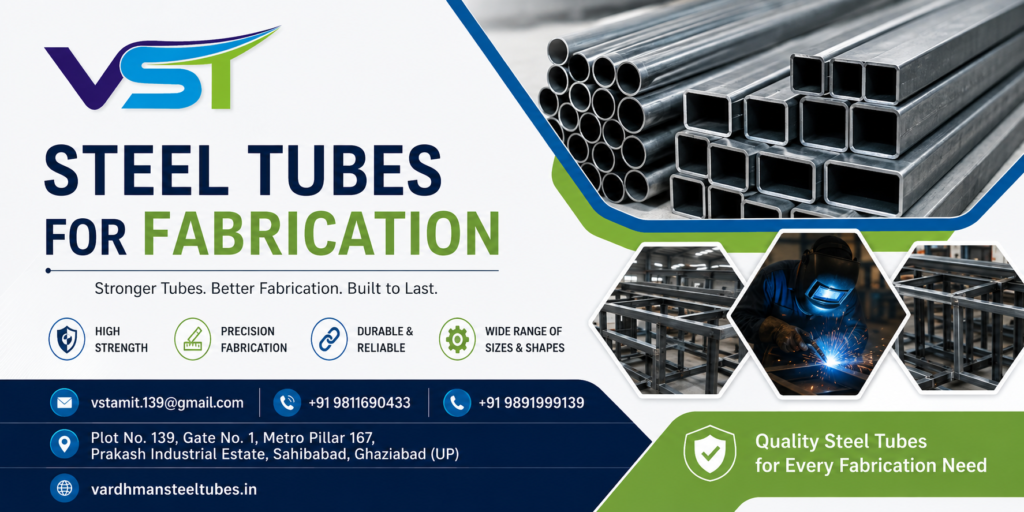
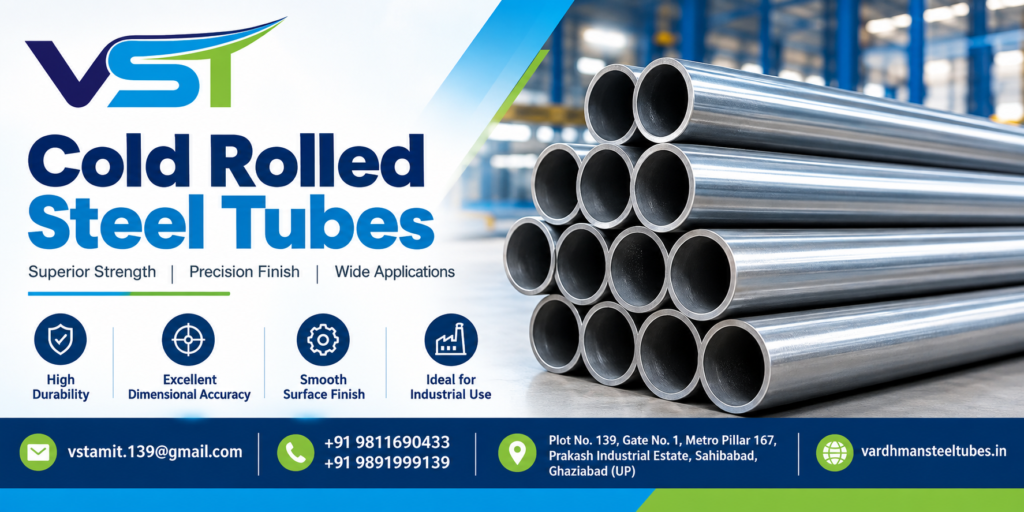
In today’s rapidly evolving industrial landscape, the demand for durable, versatile, and high-performance materials continues to grow. Among these, Steel Tubes for Fabrication by Vardhman Steel Tubes have emerged as a preferred choice for engineers, manufacturers, and construction professionals. Known for their strength, adaptability, and cost-efficiency, steel tubes play a critical role in a wide range of fabrication processes. This comprehensive guide explores everything you need to know about steel tubes for fabrication, including their types, benefits, applications, and how to choose the right option for your industrial needs. Understanding Steel Tubes for Fabrication Steel tubes are hollow structural sections widely used in fabrication due to their excellent strength-to-weight ratio. They are designed to withstand mechanical stress, making them ideal for both light and heavy-duty applications. Steel Tubes for Fabrication by Vardhman Steel Tubes are engineered with precision to meet industry standards, ensuring consistency and reliability across projects. Fabrication involves cutting, bending, welding, and assembling materials to create structures or components. Steel tubes are particularly suitable for this process because they offer uniformity, easy machinability, and long-term durability. Types of Steel Tubes Used in Fabrication Different fabrication projects require different types of steel tubes. Choosing the right type ensures optimal performance and longevity. 1. Round Steel Tubes These are commonly used in structural and mechanical applications. Their symmetrical shape allows even distribution of stress, making them ideal for load-bearing structures. 2. Square Steel Tubes Square tubes provide enhanced strength and are often used in frames, supports, and architectural structures. Their flat surfaces make them easier to weld and join. 3. Rectangular Steel Tubes These tubes are widely used in construction and fabrication where directional strength is required. They are perfect for beams, columns, and structural frameworks. 4. Cold Rolled Steel Tubes Cold rolled tubes are known for their smooth finish and high dimensional accuracy. They are ideal for precision fabrication and aesthetic applications. Key Benefits of Steel Tubes for Fabrication Using Steel Tubes for Fabrication by Vardhman Steel Tubes offers several advantages that make them indispensable in industrial applications. One of the primary benefits is strength and durability. Steel tubes can withstand heavy loads and harsh environmental conditions, ensuring long-lasting performance. Another important advantage is versatility. They can be used across various industries, from construction to automotive and infrastructure. Steel tubes are also known for their cost-effectiveness. Their durability reduces maintenance costs over time, making them a smart investment. Additionally, they offer ease of fabrication, allowing manufacturers to cut, weld, and shape them without compromising structural integrity. Corrosion resistance is another key feature, especially when treated or coated. This ensures that the tubes maintain their quality even in challenging environments. Industrial Applications of Steel Tubes Steel tubes are widely used across industries due to their adaptability and performance. In the construction industry, they are used for building frameworks, scaffolding, and structural supports. Their ability to handle heavy loads makes them essential for modern infrastructure. In the automotive sector, steel tubes are used in chassis, exhaust systems, and structural components. Their strength and lightweight properties contribute to vehicle safety and efficiency. The manufacturing industry relies heavily on steel tubes for machinery, equipment frames, and production systems. They provide the necessary strength and precision required for industrial operations. Steel tubes are also widely used in furniture fabrication, where both strength and aesthetics are important. Their smooth finish and flexibility allow for creative designs and durable products. Factors to Consider When Choosing Steel Tubes for Fabrication Selecting the right steel tubes is crucial for achieving the desired results in any fabrication project. The first factor to consider is material grade. Different grades offer varying levels of strength, flexibility, and corrosion resistance. Choosing the right grade ensures compatibility with the intended application. Size and thickness also play a vital role. The dimensions of the tube must align with the structural requirements of the project. Thicker tubes provide greater strength, while thinner ones are suitable for lightweight applications. Another important aspect is surface finish. For applications where appearance matters, smooth and polished tubes are preferred. Cold rolled steel tubes are often ideal in such cases. Weldability and machinability should also be taken into account. Steel tubes should be easy to cut and weld without compromising their structural integrity. Finally, always consider the reputation of the supplier. Choosing Steel Tubes for Fabrication by Vardhman Steel Tubes ensures consistent quality, reliable supply, and adherence to industry standards. Why Choose Vardhman Steel Tubes? When it comes to quality and reliability, Steel Tubes for Fabrication by Vardhman Steel Tubes stand out in the market. The company focuses on delivering high-performance steel products that meet the evolving needs of modern industries. Their manufacturing process emphasizes precision, ensuring that every tube meets strict quality standards. This consistency makes them a trusted choice for engineers and fabricators. Vardhman Steel Tubes also prioritizes customer satisfaction by offering tailored solutions. Whether you need tubes for heavy industrial use or precision fabrication, they provide options that align with your specific requirements. In addition, their commitment to innovation and quality control ensures that their products remain competitive in both domestic and international markets. Future Trends in Steel Tube Fabrication The fabrication industry is continuously evolving, and steel tubes are at the forefront of this transformation. With advancements in manufacturing technology, steel tubes are becoming more precise, lightweight, and durable. Sustainability is also shaping the future of fabrication. Steel is a recyclable material, making it an environmentally friendly choice for modern industries. Manufacturers are increasingly adopting eco-friendly practices to reduce their carbon footprint. Automation and smart manufacturing are further enhancing the efficiency of fabrication processes. High-quality steel tubes are essential for supporting these advanced systems, ensuring accuracy and reliability. Conclusion Steel tubes are an integral part of modern fabrication, offering unmatched strength, versatility, and cost-efficiency. Whether used in construction, automotive, or manufacturing, they provide the foundation for durable and high-performing structures. Choosing Steel Tubes for Fabrication by Vardhman Steel Tubes ensures that you receive products that meet the highest standards of quality and performance. With the

Steel Tubes for Fabrication: A Complete Guide for Industrial Applications Read More »

Scroll to Top