If you fabricate furniture frames, build e-rickshaw bodies, assemble storage racks or manufacture machine enclosures, the tube you start with decides how much work comes later. A tube that arrives with an uneven surface or inconsistent dimensions costs you extra grinding, extra filler, extra rejections and slower assembly.
That is the practical reason cold rolled steel tubes are so widely specified across Indian manufacturing. They are chosen where appearance, accurate fitting and clean finishing matter as much as strength.
This guide explains what Cold Rolled Steel Tubes are, how they differ from other steel tube options, where they are typically used, and what to confirm before you place an order. Vardhman Steel Tubes, based in Ghaziabad, Uttar Pradesh, supplies CRC pipes, tubes and sheets to buyers across these segments, and the buying advice below reflects the questions fabricators ask most often.
What Are Cold Rolled Steel Tubes?
Cold rolled steel is steel that has been further processed at or near room temperature after hot rolling. Hot rolled steel is formed at high temperature, which leaves a rougher, scaled surface and wider dimensional variation. Cold rolling passes that material through rollers again without reheating, which reduces thickness, tightens tolerances and produces a cleaner, smoother surface.
Cold rolled steel tubes, commonly called CRC tubes or CRC steel tubes, are tubes formed from this cold rolled material. The strip is shaped into a round, square, rectangular or oval profile and joined along a seam. Because the input material already has controlled thickness and a refined surface, the finished tube carries those characteristics forward.
Three qualities follow from the process:
Dimensional consistency. Outside dimensions and wall thickness stay within closer limits across a batch, so parts cut from different lengths fit the same jig.
Surface characteristics. The outer surface is typically smooth and free of heavy mill scale, which makes it more receptive to painting, powder coating, plating or polishing.
Predictable working behaviour. Cold working increases hardness and strength while reducing ductility compared to the same steel in hot rolled condition. This matters when the tube will be bent or formed.
Actual mechanical properties, tolerances and suitability always depend on the specific grade, the manufacturing route and the dimensions supplied. Confirm these with your supplier rather than assuming them.
Cold Rolled Steel Tubes vs. Other Steel Tubes
| Factor | Cold Rolled Steel Tubes | Other Steel Tube Options (e.g. hot rolled based) |
| Surface finish | Generally smooth and clean, with minimal scale | Often rougher; may carry mill scale needing cleaning |
| Dimensional accuracy | Tighter, more consistent dimensions and wall thickness | Wider permissible variation |
| Appearance | Suitable for visible and decorative components | Usually needs surface preparation before finishing |
| Fabrication | Cuts, drills and assembles predictably; bending behaviour depends on grade and temper | Often more ductile for heavy forming; may need extra prep |
| Typical applications | Furniture, interiors, light engineering, precision assemblies | Structural work, heavy sections, load-bearing frameworks |
| Relative cost | Usually higher per kg due to additional processing | Generally lower for comparable size |
Neither category is universally better. Suitability depends on grade, process, dimensions and the end application. A heavy structural column and a hospital bed frame have genuinely different requirements.
Key Benefits of Cold Rolled Steel Tubes
Smooth Surface Finish
When a tube stays visible in the finished product, surface quality is the product. Chair frames, showroom displays, interior railings, hospital furniture and e-rickshaw bodies are all judged on how the paint or coating looks. A smooth base surface means less grinding and filling, more even coating coverage and fewer visible defects after finishing. This is a major reason cold rolled tubes are preferred for downstream painting, powder coating and polishing.
Dimensional Accuracy
Consistent outside dimensions and wall thickness allow repeatable production. Jigs and fixtures hold parts the same way every time, welding gaps stay predictable, and CNC or automated cutting produces parts that fit without individual adjustment. For anyone running batch production, this consistency directly reduces rework.
Ease of Fabrication
Cold rolled tubes generally cut, drill, notch, weld and assemble in a predictable way, which is what fabrication shops value most. Predictability lets you set process parameters once and repeat them. That said, weldability and formability depend on the specific grade, wall thickness and the process used. Discuss demanding operations, tight-radius bending in particular, with your supplier before committing to a large order.
Versatile Applications
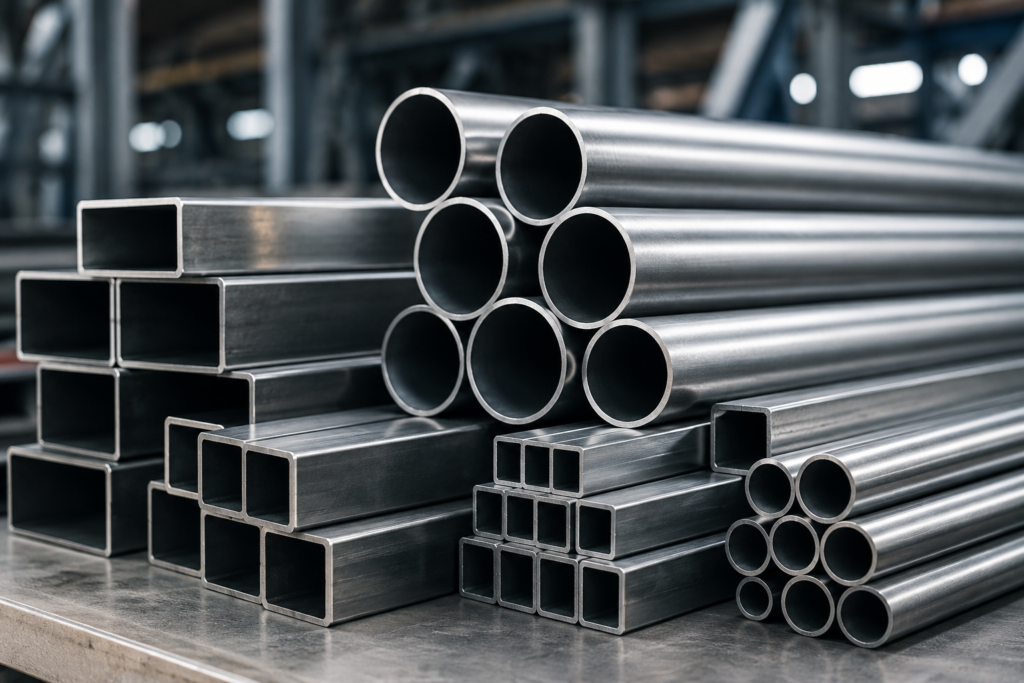
CRC tubes are available in a wide range of profiles and sizes, including square, rectangular, round and oval, in varying wall thicknesses and lengths. This range is why the same family of industrial steel tubes serves furniture workshops, engineering units and equipment manufacturers alike. You select the section that suits your load, span and appearance requirement rather than adapting your design to what is available.
Suitable for Precision-Oriented Applications
Where components must fit into sleeves, slide within assemblies, accept fixed-dimension fittings or align across multi-part frames, small dimensional variation creates real problems. Tighter tolerances and consistent wall thickness make cold rolled tubes a practical choice for these precision-oriented steel tubes for engineering applications, provided the required tolerance is specified and confirmed in advance.
Applications of Cold Rolled Steel Tubes
Common applications where CRC tubes are routinely used:
- Furniture manufacturing — chair and table frames, office furniture, modular systems, decorative interior elements
- Hospital and institutional furniture — bed frames, trolleys, cabinets, school and canteen furniture
- E-rickshaw manufacturing — body frames, structural members and support sections
- Racks and storage systems — shelving, display units, warehouse racking components
- General manufacturing and fabrication — enclosures, guards, supports, brackets
- Industrial equipment and machinery frames — panel structures, stands and non-critical framework
- Construction-related fabrication — railings, partitions, grilles, gates and interior fit-out work
Applications requiring specific engineering specifications:
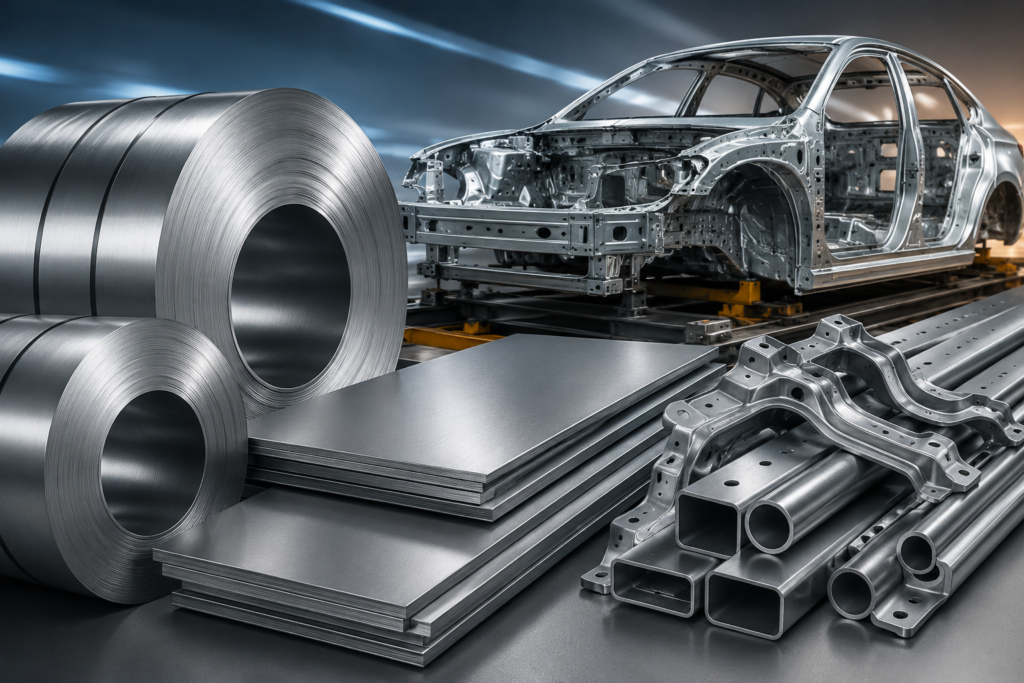
Automotive-related components, load-bearing structural elements, pressure-carrying lines and safety-critical assemblies are governed by defined material grades, mechanical property requirements and testing standards. For these, the correct approach is to state your specification and confirm that the available material meets it, rather than selecting a tube by size and appearance alone.
How to Choose the Right Cold Rolled Steel Tubes
Dimensions and Wall Thickness
Specify outside dimensions precisely: diameter for round tubes, both sides for square and rectangular sections. State wall thickness separately. Two tubes with identical outer dimensions but different wall thickness behave very differently in weight, strength and welding.
Material Requirements
Confirm the material grade or specification your application needs. If your drawing, customer or approving authority names a grade, share it upfront. If you are unsure, describe the application and ask what is available and suitable.
Surface Finish
State clearly whether the tube will remain visible, be painted, powder coated, polished or plated. Finishing requirements influence which material is appropriate and help avoid a mismatch discovered only after coating.
Length and Quantity
Calculate required lengths against standard supply lengths before ordering. Choosing a length that divides cleanly into your cut sizes reduces offcut waste noticeably over a production run. Accurate quantity estimates also help your supplier plan availability for repeat orders.
Application Requirements
Tell the supplier what you are making. A knowledgeable cold rolled steel tubes supplier can flag an unsuitable choice, suggest a better section, or point out a finish issue before material is dispatched. This single step prevents most ordering mistakes.
Supplier Reliability
Evaluate a CRC tube supplier on: consistency across repeat orders, clarity in stating specifications, availability of the sizes you use regularly, delivery capability and timelines, responsiveness to technical queries, support for bulk orders, and overall value rather than headline price alone.
Common Mistakes to Avoid When Buying Cold Rolled Steel Tubes
- Buying on price alone. A lower rate loses its advantage once rework, rejections and delays are counted.
- Overlooking wall thickness. It affects strength, weight and weldability as much as outer size does.
- Giving incomplete dimensions. Vague enquiries produce quotes for material that may not match your need.
- Not explaining the end application. Without it, a supplier cannot flag an unsuitable choice.
- Assuming all CRC tubes are identical. Grade, thickness, finish and profile all vary.
- Ignoring surface finish requirements. Problems surface after coating, when it is too late.
- Ordering without confirming quantity and delivery. Partial or late supply stalls production lines.
Why Consider Vardhman Steel Tubes?
Vardhman Steel Tubes is based in Ghaziabad, Uttar Pradesh, supplying CRC and cold rolled products including pipes, tubes, sheets, square tubes, round pipes and oval pipes.
The product range serves buyers in construction, engineering, fabrication, manufacturing, furniture and automotive-related work. Typical use cases include furniture making, e-rickshaw manufacturing, medical equipment fabrication and interior work, which reflects the profiles and sizes commonly stocked.
Being located in the Ghaziabad–Delhi NCR industrial belt is practically useful for buyers in the region who need responsive supply and direct discussion of requirements. For anyone sourcing cold rolled steel tubes in India, the most productive first step is to share your dimensions, wall thickness, quantity and intended application and confirm what is available against them.
Frequently Asked Questions
What are cold rolled steel tubes used for?
Cold rolled steel tubes are used in furniture manufacturing, e-rickshaw and automotive-related components, hospital and institutional furniture, storage racks, machinery frames, industrial equipment and general fabrication. They suit applications needing a smooth surface, consistent dimensions and a good base for painting, powder coating or polishing.
What is the difference between CRC tubes and hot rolled tubes?
CRC tubes are made from steel processed at room temperature, giving a smoother surface and tighter dimensional tolerances. Hot rolled tubes are formed at high temperature, resulting in a rougher surface and wider variation. CRC is preferred where finish and accuracy matter; hot rolled is common in heavier structural work.
Do cold rolled steel tubes rust?
Cold rolled steel tubes are not inherently corrosion resistant and can rust if left unprotected in moisture. Their smooth, scale-free surface makes them well suited to painting, powder coating, plating or galvanizing, which provides the corrosion protection needed for most indoor and outdoor applications.
Can cold rolled steel tubes be welded and bent?
Yes, cold rolled steel tubes are generally welded, cut, drilled and formed in standard fabrication work. Cold working increases hardness and reduces ductility, so tight-radius bending needs care. Confirm the specific grade and wall thickness with your supplier before demanding forming operations.
What should I check before ordering CRC tubes?
Confirm outside dimensions, wall thickness, profile, material specification, surface finish, required length and total quantity. Also explain the intended application so the supplier can confirm suitability. Discuss delivery timelines upfront, and get all specifications confirmed in writing before the order is placed.
Conclusion
Cold rolled steel tubes are steel tubes produced from cold rolled material, valued for their smooth surface, consistent dimensions and predictable behaviour during fabrication. Those qualities make them a practical choice across furniture, engineering, fabrication, e-rickshaw, storage and general manufacturing applications where fit and finish influence the final product.
The buying decision comes down to detail. Dimensions, wall thickness, material specification, surface finish, length and quantity all shape whether the material performs on your shop floor. Specify them clearly, explain your application, and choose a supplier who engages with the technical side of your requirement rather than quoting a rate alone. Getting those specifications right is what turns cold rolled steel tubes from a commodity purchase into a reliable input for your production.
Visit site:- https://vardhmansteeltubes.in/
Call: +91-9811690433, +91-9891999139
Email: vstamit.139@gmail.com
Address: Plot No. 139, Gate No. 1, Metro Pillar 167, Prakash Industrial Estate, Sahibabad, Ghaziabad (UP)