If you’ve ever stood in front of a steel supplier’s catalogue trying to decide which tube to order, you know the feeling — rows of specs, grades, and sizes, and no clear idea which one actually fits your job. Pick the wrong tube and you either overpay for strength you don’t need, or worse, end up with a structure that can’t handle the load it was built for.
This is a more common problem than most people admit. Fabricators, contractors, and even engineers sometimes default to “whatever we used last time” instead of matching the tube to the actual application. It works — until it doesn’t.
This guide breaks down everything you need to know about Steel Tubes for Fabrication — the types, the grades, how to choose the right one, and the mistakes that quietly cost fabricators time and money. Whether you’re building a structural frame, furniture, machinery parts, or industrial equipment, you’ll walk away knowing exactly what to ask your supplier for.
What Are Steel Tubes for Fabrication?
In simple terms, fabrication-grade steel tubes are hollow steel sections manufactured to be cut, welded, bent, and shaped into finished structures or components. Unlike pipes, which are primarily meant to carry fluids or gases, fabrication tubes are chosen for their strength, shape consistency, and how well they hold up under welding and mechanical stress.
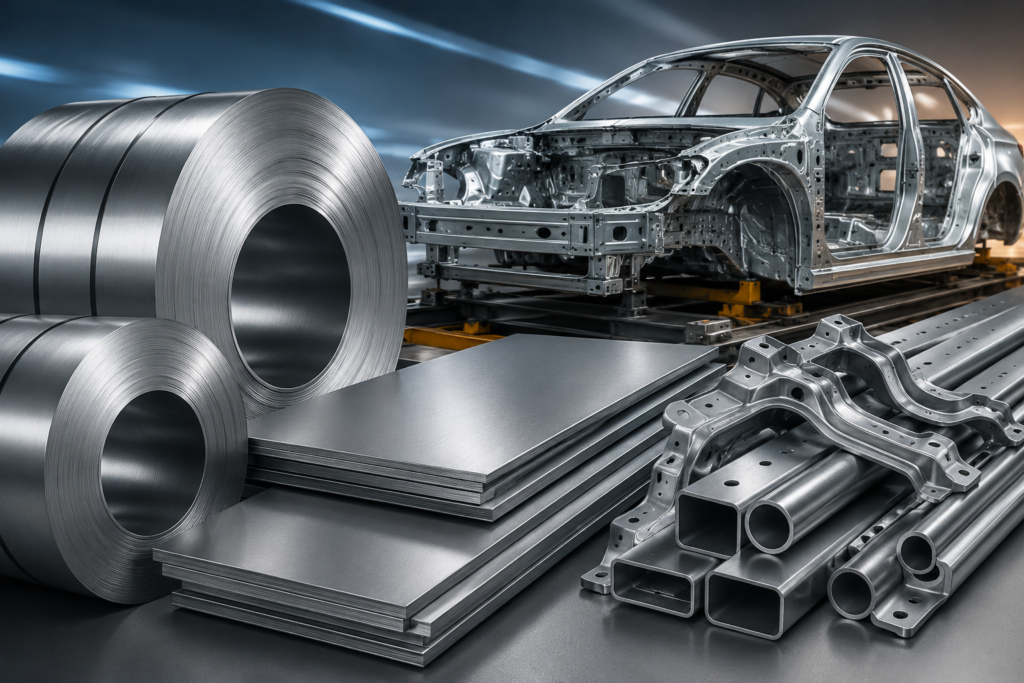
You’ll find them in everything from building frames and staircases to trailer chassis, machine guards, conveyor systems, and even gym equipment. The reason steel tubes are so widely used comes down to three things: they’re strong relative to their weight, they’re easy to work with, and they give a clean, professional finish once fabricated.
Common Types of Steel Tubes Used in Fabrication
Not all tubes are built the same way, and the manufacturing process changes how the tube behaves once it’s in your workshop.
- ERW Tubes (Electric Resistance Welded): Made by rolling steel strip and welding the seam using electric resistance heat. Cost-effective and widely used for structural and general fabrication work.
- Seamless Tubes: Made without a weld seam, offering higher pressure resistance. Common in high-stress or precision applications.
- Cold-Formed Tubes: Shaped at room temperature, giving tighter dimensional tolerances — useful where fit and finish matter.
- Hot-Rolled Tubes: Formed at high temperatures, generally more affordable and suited to heavier structural applications.
Common Shapes You’ll Come Across
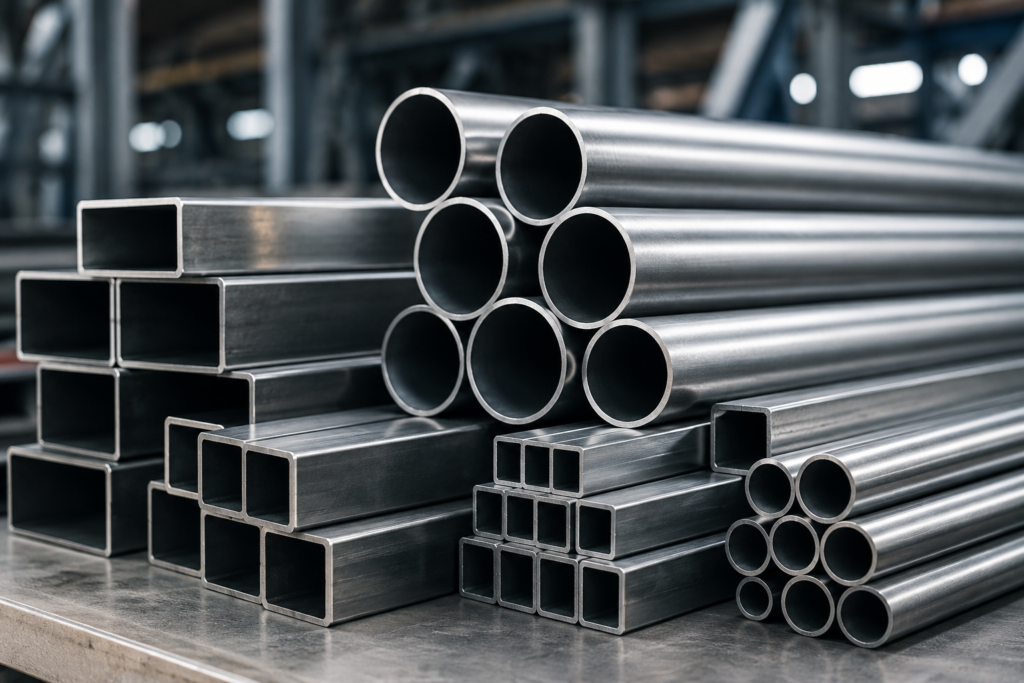
Steel tubes for fabrication generally come in four shapes — round, square, rectangular, and oval. Each shape serves a different structural purpose, which is exactly why picking the right one matters more than people expect.
Quick Comparison: Tube Types at a Glance
| Tube Type | Best For | Strength Level | Cost |
| ERW Tubes | General fabrication, structural framing | Medium-High | Economical |
| Seamless Tubes | High-pressure, precision components | High | Premium |
| Cold-Formed Tubes | Furniture, precision fabrication | Medium | Moderate |
| Hot-Rolled Tubes | Heavy structural work | High | Economical |
Note: Actual strength and cost vary by grade, wall thickness, and supplier. Use this as a starting reference, not a final spec.
Key Benefits of Using the Right Steel Tubes
Choosing correctly-specified tubes isn’t just a technical checkbox — it directly affects your project’s cost, timeline, and long-term durability.
- Structural reliability: The right tube handles load and stress without bending, cracking, or fatiguing early.
- Better weld quality: Matching grade and wall thickness to your welding process reduces defects and rework.
- Cost efficiency: Avoids over-specifying (wasted material cost) or under-specifying (safety and warranty risk).
- Consistent finish: Tighter tolerances mean cleaner cuts, easier bending, and a more professional final product.
- Longer service life: Correct grade selection resists corrosion, wear, and fatigue over years of use, not just months.
How to Choose the Right Steel Tube: A Step-by-Step Approach
You don’t need to be a metallurgist to make a smart decision. You just need to ask the right questions in the right order.
Step-by-Step Selection Process
| Step | What to Determine | Why It Matters |
| 1. Define load requirement | Static, dynamic, or impact load | Determines wall thickness and grade needed |
| 2. Choose shape | Round, square, rectangular, oval | Affects load distribution and aesthetics |
| 3. Select grade | Mild steel, structural, or alloy grade | Impacts strength, weldability, corrosion resistance |
| 4. Check environment | Indoor, outdoor, humid, corrosive | Decides if coating or galvanization is needed |
| 5. Confirm supplier standards | Certifications, tolerances, testing reports | Ensures consistent, reliable batches |
Note: Following this order prevents the most common planning mistake — picking a shape or size before the load requirement is even defined.
Tips and Best Practices for Buying Fabrication Tubes
- Always ask for a mill test certificate. It confirms the chemical and mechanical properties actually match the grade you’re paying for.
- Buy slightly thicker wall than the minimum calculated requirement. A small safety margin costs little but avoids failure under unexpected load.
- Match your welding process to the tube grade. Some grades need pre-heating or specific filler metals to avoid weld cracking.
- Inspect for surface defects before cutting. Scale, pitting, or dents are easier to catch before you’ve invested labor into the piece.
- Store tubes off the ground and covered. Moisture exposure before fabrication can cause rust that compromises weld quality later.
Do’s and Don’ts Checklist
| Do | Don’t |
| Verify grade and thickness against your load calculations | Assume all tubes of the same size are interchangeable |
| Request certification and test reports from your supplier | Buy purely on price without checking quality documentation |
| Factor in the fabrication environment (indoor/outdoor) | Ignore corrosion protection for outdoor structures |
| Store tubes properly before use | Leave tubes exposed to moisture for long periods |
Note: Most fabrication failures trace back to one of these avoidable mistakes, not a flaw in the steel itself.
Common Mistakes to Avoid
Even experienced fabricators fall into a few recurring traps:
- Choosing by size alone: Two tubes can be the same diameter but have completely different wall thickness and load capacity.
- Ignoring the welding heat-affected zone: Some grades lose strength near the weld if not handled correctly, which can be a silent point of failure.
- Overlooking corrosion protection: Outdoor or humid-environment projects need coated or galvanized tubes — skipping this shortens lifespan significantly.
- Not accounting for tolerances: Slight dimensional variation between batches can throw off precision assemblies if not checked upfront.
Buying Guide Checklist
| Checklist Item | Confirmed? |
| Load requirement calculated | ☐ |
| Correct grade and shape selected | ☐ |
| Mill test certificate requested | ☐ |
| Corrosion protection considered | ☐ |
| Supplier reliability verified | ☐ |
Note: Keep this checklist handy for every new fabrication project — it takes minutes but saves rework later.
Frequently Asked Questions
1. What’s the difference between steel tubes and steel pipes?
Pipes are primarily designed to carry liquids or gases and are sized by internal diameter. Tubes are measured by outer dimensions and are chosen mainly for structural strength and shape precision in fabrication work.
2. Which steel tube grade is best for general fabrication work?
For most general structural and fabrication jobs, mild steel ERW tubes offer a strong balance of cost, weldability, and strength. Higher-stress or precision jobs may call for alloy or seamless grades.
3. Do steel tubes need extra coating for outdoor use?
Yes, in most cases. Uncoated tubes exposed to moisture or humidity will corrode faster. Galvanized or painted tubes are recommended for outdoor structures, railings, or equipment.
4. How do I know what wall thickness I need?
Wall thickness depends on the load the tube will carry and the span or length involved. It’s best calculated based on your specific application, ideally with input from a structural engineer or an experienced supplier.
5. Can steel tubes be bent without losing strength?
Yes, when done correctly. Cold-formed and certain mild steel tubes bend well without cracking, but the bend radius and technique used matter — tight, improper bends can weaken the tube at the curve.
6. How do I verify tube quality before purchasing in bulk?
Ask your supplier for mill test certificates, check for consistent surface finish and dimensional accuracy, and if possible, request a small sample batch before committing to a full order.
Final Thoughts
Picking the right steel tube isn’t about finding the “best” tube in some universal sense — it’s about matching the tube to your specific load, environment, and fabrication process. Get that match right, and you’ll spend less time troubleshooting welds, less money on oversized material, and end up with a structure that holds up for years, not months.
At Vardhman Steel Tubes, this is the kind of guidance we give every customer who walks through our doors — because a good tube recommendation should be based on your project, not just what’s sitting in stock. If you’re planning your next fabrication project and want tubes matched to your exact specifications, reach out to our team. We’re happy to walk you through grades, sizes, and certifications until you’re confident in what you’re ordering.
Call: +91-9811690433, +91-9891999139
Email: vstamit.139@gmail.com
Address: Plot No. 139, Gate No. 1, Metro Pillar 167, Prakash Industrial Estate, Sahibabad, Ghaziabad (UP)