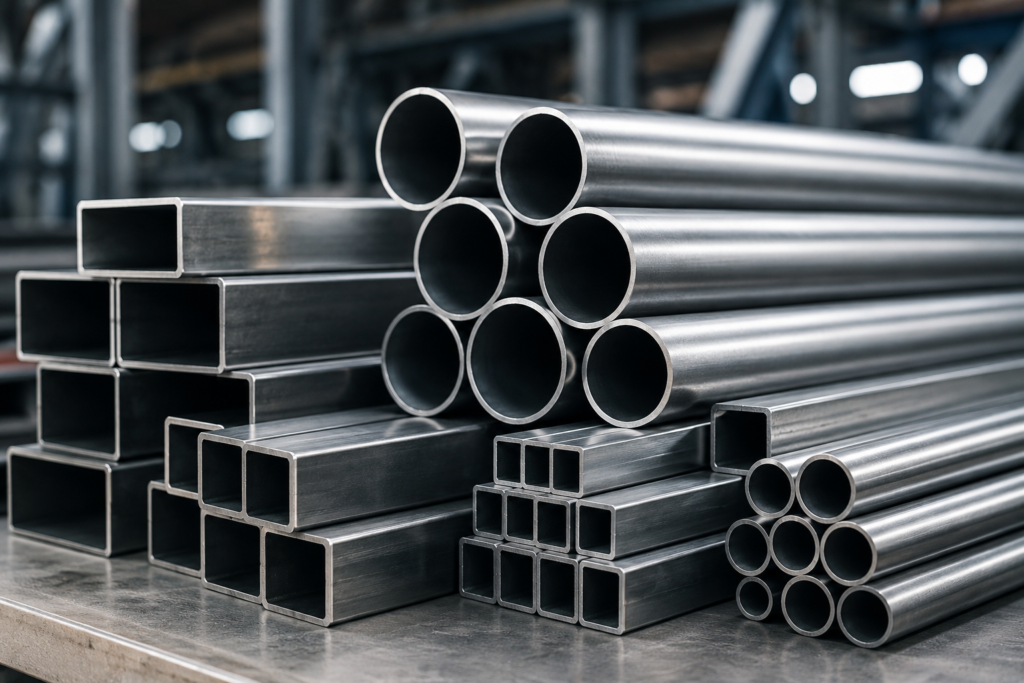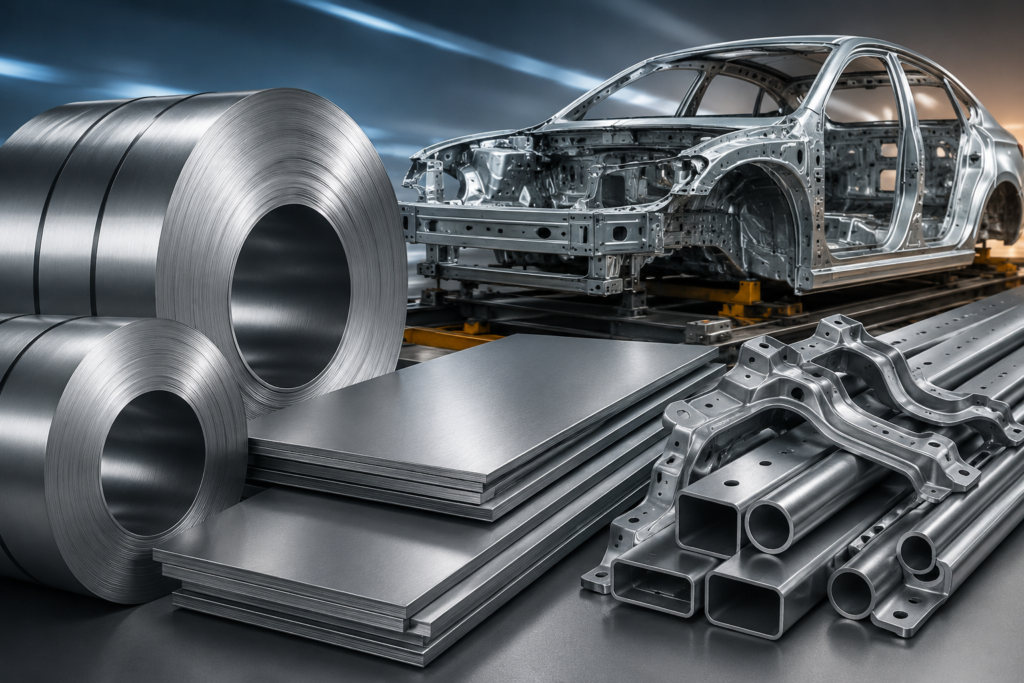
When a component has to fit exactly, the pipe behind it matters as much as the design. Cold rolled steel pipes are widely used where dimensional accuracy, a clean surface finish and consistent material quality are part of the requirement, not a bonus.
These qualities explain their place across manufacturing, automotive, construction, engineering and fabrication work. A frame that has to align, a part that has to be machined or a structure that has to look finished all depend on a pipe that arrives close to its specified size and with a surface ready for the next step.
This guide explains what cold rolled pipes are, how they are generally made, what benefits they offer, where they are used and how to choose the right one. It also covers the difference between pipes and tubes, and how Vardhman Steel Tubes presents its cold rolled pipe range.
What Are Cold Rolled Steel Pipes?
Cold rolling is a steel processing method carried out at or near room temperature, after the steel has first been formed. Unlike hot working, which shapes steel at high temperatures, cold working reduces thickness and refines dimensions without heating the metal above its recrystallisation point.
This matters for three reasons:
- Dimensional accuracy: Cold working allows tighter control over outside diameter and wall thickness.
- Surface finish: The surface is generally smoother and cleaner because it avoids the scale that forms on steel at high temperatures.
- Material behaviour: Cold working can change properties such as strength and hardness, depending on the grade and the amount of reduction.
Manufacturers choose cold rolled products when an application needs precise dimensions or a better surface. Compared with hot rolled pipes, which are often chosen for general structural and industrial uses, cold rolled pipes are typically selected where fit, finish and consistency carry more weight.
Manufacturing Process of Cold Rolled Steel Pipes
Processes vary between manufacturers and product grades, so the following is a general outline rather than a description of any single plant.
- Material selection and preparation: Suitable steel is chosen for the intended grade and application, then prepared for forming. The quality of the starting material strongly influences the final pipe.
- Initial forming: The steel is shaped into a pipe form using the manufacturer’s chosen forming method.
- Cold reduction and dimensional control: The pipe is worked at room temperature to bring outside diameter and wall thickness closer to the required size.
- Sizing and finishing: Further operations refine dimensions and improve the surface, and may include straightening or cutting to length.
- Quality inspection: Finished pipes are checked, typically for dimensions, surface condition and conformity with the agreed specification.
Each stage affects the end result. Careful dimensional control supports consistent size, finishing determines surface quality, and inspection helps catch pipes that fall outside the required limits. Buyers who need specific tolerances should confirm them with the supplier rather than assume them.
Key Properties and Benefits of Cold Rolled Steel Pipes
- Accurate dimensional tolerances: Cold working supports tighter control over size, which helps parts fit together as designed.
- Smooth surface finish: A cleaner surface suits applications where appearance matters or where coating, plating or painting follows.
- Consistent wall thickness, where applicable: Uniform walls help predictable performance and make fabrication easier.
- Good dimensional consistency: Pipes from the same batch tend to match each other more closely, which matters in repeat production.
- Suitability for precision engineering: Components with close fitting requirements often rely on this level of control.
- Ease of further fabrication and finishing: Depending on grade and specification, these pipes can be cut, bent, welded or finished with fewer preparation steps.
In practice, these characteristics can reduce rework on the shop floor, make assemblies more uniform and give finished products a neater look. The exact benefit depends on the material grade and the specification ordered.
Common Industrial Applications of Cold Rolled Steel Pipes
- Automotive industry: Components and structural parts that need dimensional precision.
- Engineering industry: Precision components and fabricated assemblies.
- Furniture manufacturing: Tubular frames and furniture structures, where finish and uniform dimensions are important.
- Construction industry: Fabrication and structural uses, depending on specifications.
- Industrial equipment: Parts used in machinery and equipment manufacturing.
- General fabrication: Work that calls for consistent dimensions and a suitable surface finish.
The right pipe depends on the intended application, load requirements, material grade and operating conditions. A pipe that works well for a furniture frame may not suit a load-bearing structure, so specifications should always be matched to the job.
Cold Rolled Steel Pipes vs. Cold Rolled Steel Tubes
In everyday trade, the words pipe and tube are often used loosely, but in many industries they carry different meanings. Pipes are commonly associated with carrying fluids and are usually specified by nominal size. Cold rolled steel tubes are more often specified by exact outside diameter and wall thickness, and are used where precise dimensions or structural and mechanical performance matter.
The distinction also shows up in:
- Terminology and usage: Different industries and standards use the terms differently, so the same product may be named differently from one buyer to the next.
- Dimensions and tolerances: Tubes are commonly held to tighter dimensional requirements than pipes.
- Applications and selection: Fluid handling points toward pipes, while mechanical and structural parts often point toward tubes.
Pipes and tubes are not always interchangeable, and the difference depends on the application and the applicable specification. Before purchasing, confirm the outside diameter, wall thickness, material grade and required standards, and describe the use to the supplier so the right product is quoted.
Comparison: Cold Rolled Steel Pipes and Hot Rolled Steel Pipes
| Comparison Factor | Cold Rolled Steel Pipes | Hot Rolled Steel Pipes |
| Processing | Processed through cold working | Processed at elevated temperatures |
| Surface Finish | Generally smoother | Generally rougher |
| Dimensional Accuracy | Often offers tighter dimensional control | Generally has wider dimensional tolerances |
| Applications | Precision engineering and fabrication | General industrial and structural applications |
| Selection | Based on precision and finishing requirements | Based on application and structural requirements |
Neither option is better in every case. The right product depends on the required specifications, the application and the performance expected. If tight tolerances and a clean finish matter, cold rolled is usually the stronger candidate. If the job is general structural work, hot rolled may be sufficient.
How to Choose the Right Cold Rolled Steel Pipes
A clear specification saves time and avoids costly mismatches. Before ordering cold rolled steel pipes, work through these points:
- Outside diameter and wall thickness: Define both, as they determine fit and strength.
- Material grade and composition: The grade affects strength, formability and weldability.
- Dimensional tolerances: State how tight the tolerances need to be for your application.
- Surface finish: Decide whether the pipe will be coated, painted, plated or left exposed.
- Intended application: Share the end use so the supplier can recommend a suitable option.
- Quality standards: Identify any standards your project or customer requires.
- Supplier reliability and consistency: Repeat orders should match earlier ones in size and finish.
- Technical specifications and documentation: Ask for the details in writing so they can be checked against your requirement.
A short, clear enquiry that lists these points helps a supplier respond accurately.
Why Consider Vardhman Steel Tubes?
Vardhman Steel Tubes, based in Sahibabad, Ghaziabad, offers cold rolled pipe products for industrial and engineering requirements. You can review the product information on the Cold Rolled Pipe page to see what is listed.
Because pipe dimensions and specifications depend on the application, the practical next step is to share your requirement directly. Details such as size, grade, quantity and intended use are best discussed with the team, who can respond to product-related enquiries. You can reach them through the contact page or the details at the end of this article.
Frequently Asked Questions (FAQs)
1. What are cold rolled steel pipes?
They are steel pipes finished through cold working, which gives tighter dimensional control and a smoother surface than many hot processed products.
2. How do cold rolled pipes differ from hot rolled pipes?
Hot rolled pipes are processed at high temperatures and generally have a rougher surface and wider tolerances. Cold rolled pipes are generally smoother and held to closer dimensions.
3. Are cold rolled steel tubes the same as pipes?
Not always. The terms are used differently across industries. Tubes are often specified by exact outside diameter and wall thickness, so confirm specifications before ordering cold rolled steel tubes or pipes.
4. Which industries use cold rolled pipes?
Common uses include automotive, engineering, furniture manufacturing, construction, industrial equipment and general fabrication.
5. What should I share when enquiring about cold rolled pipes?
Provide the outside diameter, wall thickness, material grade, tolerance needs, surface finish, quantity and intended application. You can start from the Cold Rolled Pipe page.
Business Contact Details
Company Name: Vardhman Steel Tubes
Phone: +91 9811690433 | +91 9891999139
Email: vstamit.139@gmail.com
Address: Plot No. 139, Gate No. 1, Metro Pillar 167, Prakash Industrial Estate, Sahibabad, Ghaziabad (UP)
Website: www.vardhmansteeltubes.in