Picture this: you’re a site engineer with a project deadline breathing down your neck, and the batch of pipes that just arrived has inconsistent wall thickness, uneven surface finish, and a couple of dented lengths that won’t fit your fabrication specs. Sound familiar? If you’ve ever sourced steel pipes for a construction, furniture, or industrial project, you know how much a single bad supplier can throw off your entire timeline.
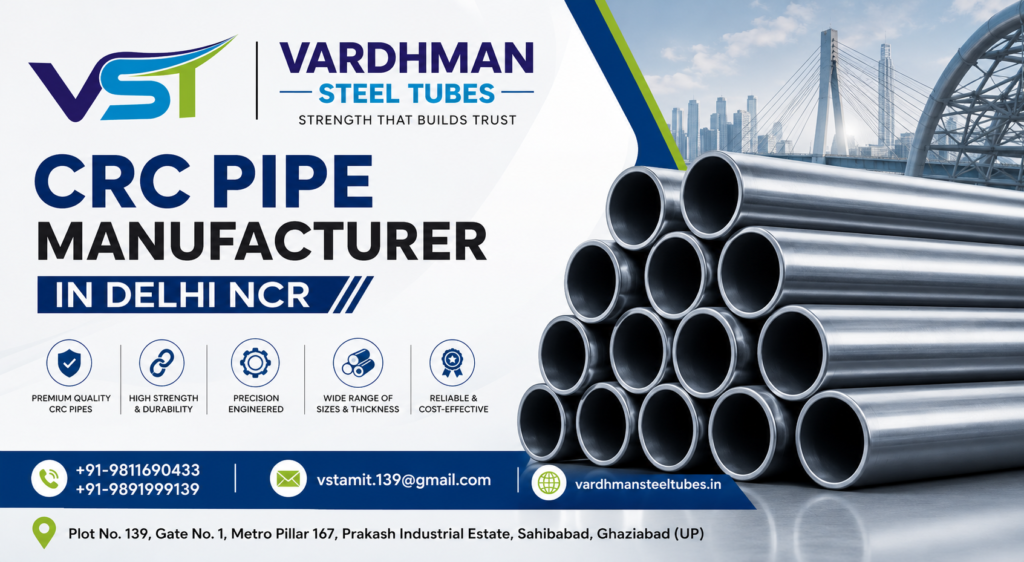
This is exactly the kind of headache that pushes buyers to search for a dependable CRC pipe manufacturer in Delhi NCR — one that doesn’t just sell pipes, but actually understands quality control, timely dispatch, and honest customer service. That’s where Vardhman Steel Tubes come in. In this article, we’ll break down what CRC pipes actually are, why they matter, and why so many contractors, fabricators, and traders across Delhi NCR keep coming back to Vardhman Steel Tubes for their pipe requirements.
What Are CRC Pipes, and Why Do They Matter?
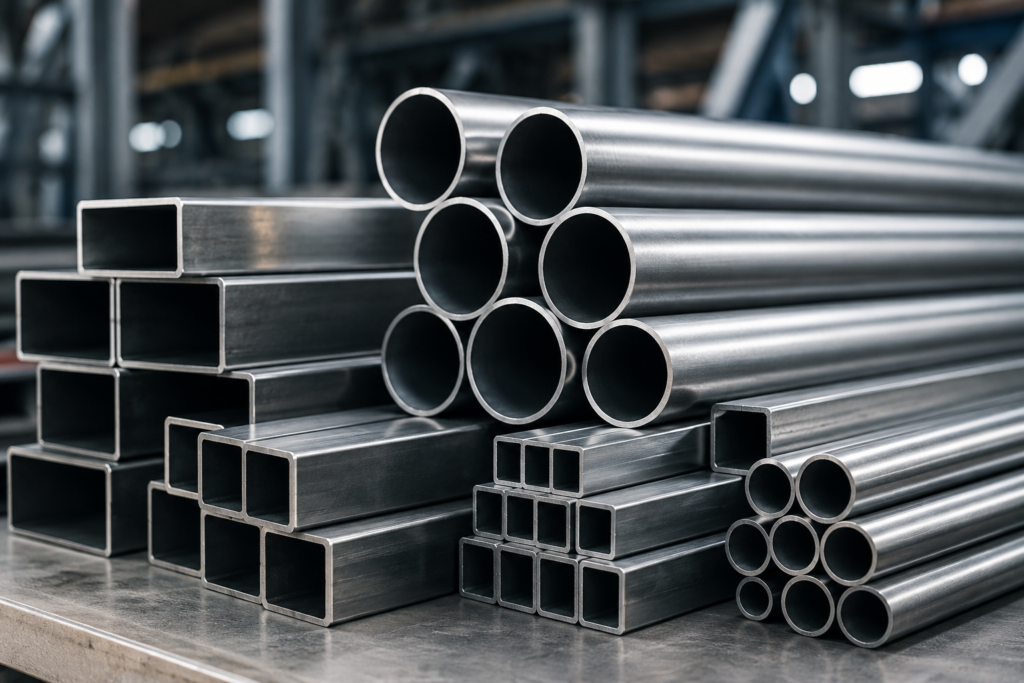
CRC stands for Cold Rolled Coil. In simple terms, CRC pipes are manufactured from steel coils that have been rolled at room temperature (rather than at high heat, as with hot-rolled steel). This cold-rolling process gives the steel a smoother surface finish, tighter dimensional tolerance, and better mechanical strength compared to hot-rolled coil (HRC) pipes.
Think of it like the difference between a rough, handmade wooden table and one that’s been sanded and finished to a polished shine. Both can hold weight, but one is clearly more refined, more precise, and better suited for applications where appearance and accuracy matter — like furniture frames, railings, automotive parts, and precision fabrication work.
Where Are CRC Pipes Commonly Used?
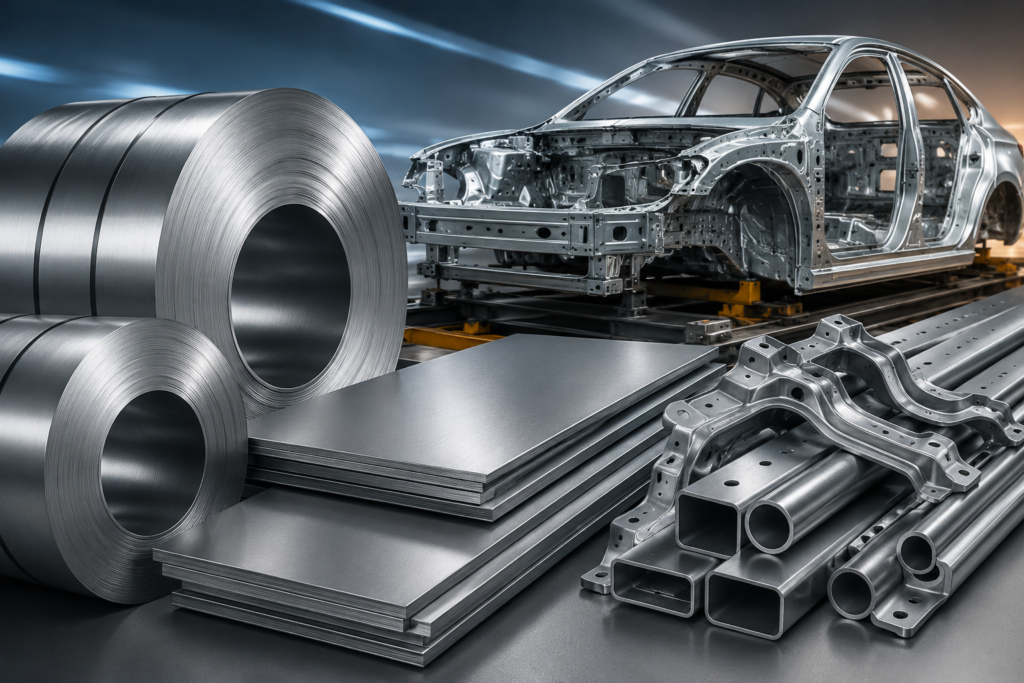
CRC pipes are the unsung workhorses of several industries. You’ll typically find them in:
- Furniture manufacturing (chairs, tables, racks, trolleys)
- Interior and exterior railings
- Automotive components and chassis parts
- Agricultural equipment
- Fabrication of gates, grills, and structural frames
- Industrial machinery parts
Because of this wide range of applications, the demand for a consistent, quality-focused CRC pipe manufacturer in Delhi NCR has grown steadily — especially as the region continues to be one of India’s biggest hubs for steel trading, fabrication, and manufacturing.
CRC Pipes vs HRC Pipes: Understanding the Difference
One of the most common questions buyers ask is how CRC pipes actually differ from hot-rolled (HRC) pipes. Here’s a simple side-by-side comparison to help you decide which one suits your project.
Comparison Table: CRC Pipes vs HRC Pipes
| Parameter | CRC Pipes | HRC Pipes |
| Surface Finish | Smooth, polished appearance | Slightly rough, scaled surface |
| Dimensional Accuracy | Very precise tolerances | Slightly looser tolerances |
| Ideal Use Case | Furniture, railings, precision fabrication | Heavy structural, construction work |
| Cost | Slightly higher (due to processing) | Comparatively economical |
Note: The right choice depends on your project’s finish requirements and load expectations. For decorative or precision work, CRC pipes are usually the better fit.
Why Vardhman Steel Tubes Stands Out as a CRC Pipe Manufacturer in Delhi NCR
Delhi NCR has no shortage of steel pipe suppliers — but not all of them offer the same consistency, transparency, or technical support. Vardhman Steel Tubes has built its reputation over the years by focusing on things that actually matter to buyers: quality raw material, precise manufacturing, and dependable delivery.
Key Benefits of Choosing Vardhman Steel Tubes
- Consistent Quality: Every batch goes through strict quality checks to maintain uniform thickness, strength, and finish.
- Wide Range of Sizes: From thin-gauge pipes for furniture to thicker sections for industrial use, there’s a size for nearly every requirement.
- Competitive Pricing: Direct manufacturing means fewer middlemen and better rates for bulk buyers.
- Timely Delivery: A strong logistics network across Delhi NCR ensures orders reach fabricators and traders without delay.
- Technical Guidance: Experienced staff who can help you choose the right pipe specification for your specific application.
- Strong Local Presence: Being based in Delhi NCR means faster turnaround and easier communication compared to sourcing from distant states.
Feature & Benefit Table
| Feature | Why It Matters to You |
| Uniform Wall Thickness | Prevents weak points, ensures structural reliability |
| Smooth Surface Finish | Better paint/coating adhesion, cleaner final product |
| Bulk Order Capacity | Suitable for large contractors and repeat traders |
| Local Delhi NCR Base | Faster delivery, lower freight costs, easy site visits |
This table highlights how each feature translates into real, practical value for buyers and fabricators.
How to Choose the Right CRC Pipe Supplier: A Step-by-Step Process
If you’re new to sourcing steel pipes, the process can feel overwhelming. Here’s a simple, practical approach to help you make the right choice.
Step-by-Step Buying Process
| Step | What to Do |
| 1. Define Your Requirement | Note the diameter, thickness, length, and quantity you need |
| 2. Ask for Material Certification | Request test certificates to confirm grade and strength |
| 3. Request Sample Pipes | Check finish, weight, and consistency before bulk ordering |
| 4. Compare Pricing & Terms | Look beyond price — check delivery timelines and payment terms |
| 5. Place a Trial Order | Start with a smaller order to evaluate service quality |
| 6. Build a Long-Term Relationship | Once satisfied, move to regular bulk sourcing for better rates |
Following this process reduces the risk of quality issues and helps you build a reliable, long-term supplier relationship.
Tips & Best Practices When Sourcing CRC Pipes
- Always check the IS certification (like IS 10748 for CRC pipes) to confirm the product meets national quality standards.
- Don’t just compare price per kg — factor in delivery cost, lead time, and after-sales support too.
- Ask about minimum order quantities if you’re a smaller fabricator, so you don’t overcommit on stock.
- Inspect a sample piece physically — run your hand along the surface and check for burrs, dents, or inconsistent welding on the seam.
- Maintain a relationship with one or two trusted suppliers instead of constantly switching, since consistency matters more than a marginal price difference.
Common Mistakes to Avoid When Buying CRC Pipes
Even experienced buyers sometimes slip up. Here’s a quick Do’s and Don’ts table to keep you on track.
Do’s and Don’ts Table
| Do’s | Don’ts |
| Verify supplier credentials and past client references | Don’t choose a supplier based purely on the lowest quote |
| Request material test certificates for every batch | Don’t skip physical inspection of sample pipes |
| Clarify delivery timelines in writing before ordering | Don’t assume verbal promises will hold during peak demand |
| Ask questions about grade, thickness, and tolerance | Don’t hesitate to ask — a good supplier will always explain |
A little diligence upfront saves a lot of trouble later — especially on large or time-sensitive projects.
Frequently Asked Questions
1. What is the difference between CRC and MS pipes?
CRC pipes are made from cold-rolled coil, offering a smoother finish and tighter tolerances, while MS (Mild Steel) pipes can be made from either hot-rolled or cold-rolled coil depending on the intended use. CRC pipes are generally preferred for applications needing a refined finish.
2. Is Vardhman Steel Tubes suitable for both small and bulk orders?
Yes, Vardhman Steel Tubes caters to both individual fabricators with smaller requirements and large contractors or traders needing bulk supply, with flexible order quantities.
3. What sizes of CRC pipes are typically available?
CRC pipes are usually available in a wide range of diameters and thicknesses, from thin-gauge pipes used in furniture to thicker sections for industrial applications. It’s best to share your exact specification with the supplier for confirmation.
4. How can I verify the quality of CRC pipes before a bulk purchase?
Request a sample batch, check the material test certificate, and physically inspect the surface finish, weld seam, and wall thickness before confirming a large order.
5. Why should I choose a local Delhi NCR manufacturer instead of sourcing from another state?
A local manufacturer like Vardhman Steel Tubes offers faster delivery, lower transportation costs, easier communication, and the ability to visit the facility or resolve issues quickly if needed.
6. Do CRC pipes require any special maintenance after installation?
Generally, CRC pipes are low-maintenance, but applying a protective coating or paint is recommended in humid or outdoor environments to prevent long-term corrosion.
Final Thoughts
Choosing the right CRC pipe manufacturer in Delhi NCR isn’t just about finding the cheapest quote — it’s about finding a partner who understands your project, delivers consistent quality, and shows up on time, every time. Vardhman Steel Tubes has built its name on exactly these principles, combining precise manufacturing with genuine customer support to serve fabricators, contractors, and traders across the region.
Whether you’re working on a small furniture project or sourcing pipes in bulk for a large construction contract, it pays to work with a supplier who treats your project like their own. If you’re currently evaluating CRC pipe suppliers in Delhi NCR, it might be worth reaching out to Vardhman Steel Tubes for a sample order and seeing the quality difference for yourself.
Call: +91-9811690433, +91-9891999139
Email: vstamit.139@gmail.com
Address: Plot No. 139, Gate No. 1, Metro Pillar 167, Prakash Industrial Estate, Sahibabad, Ghaziabad (UP)