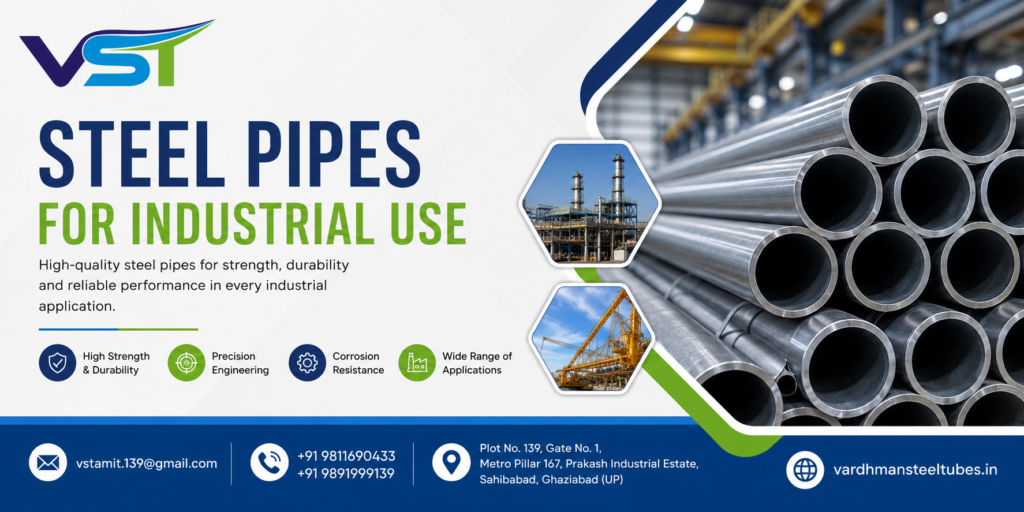
Buying Steel Pipes for Industrial Use is rarely as simple as picking a diameter and placing an order. The right pipe depends on the application, the load it needs to bear, the fabrication process it will go through, and the finish the end product requires. Getting these details wrong can mean rework, wasted material, or a product that fails to perform once it’s in the field. This guide walks through what industrial buyers, fabricators, and procurement teams should check before purchasing steel pipes, and how different pipe types — including CRC pipes and cold rolled steel tubes — fit different jobs.
Before buying steel pipes for industrial use, confirm the outside diameter, wall thickness, length, and steel grade required for your application. Check surface finish and dimensional tolerance if the pipe will be welded or machined, verify quality documentation, and choose a supplier who can consistently deliver the specified dimensions and grade on time.
What Are Steel Pipes for Industrial Use?
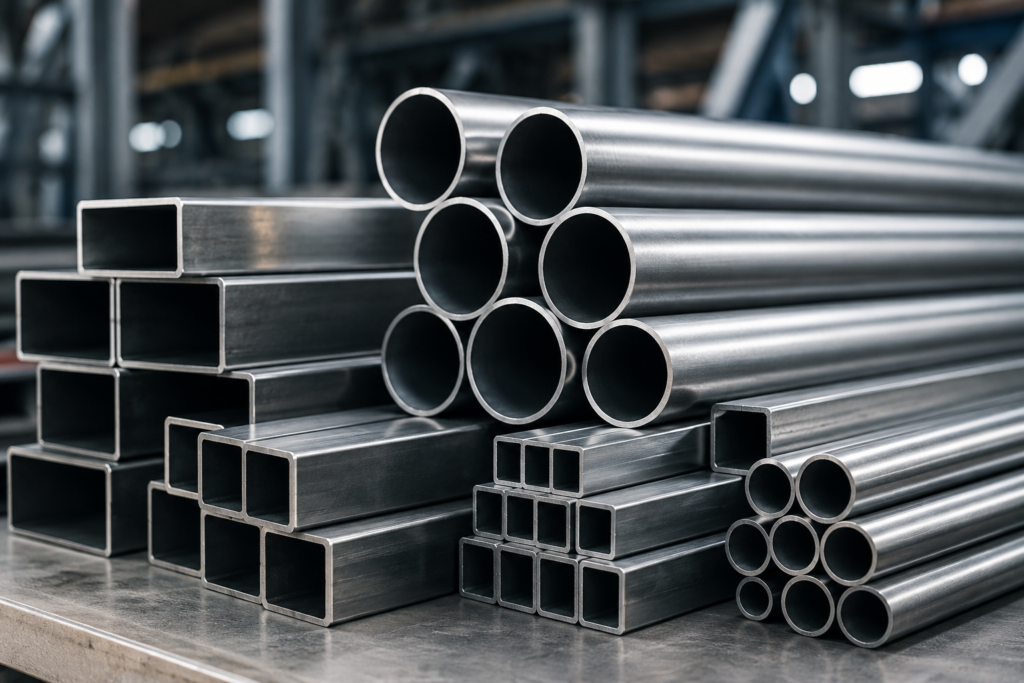
Steel pipes for industrial use are hollow steel sections manufactured for structural, mechanical, or fabrication purposes rather than for carrying fluids under pressure, as many pressure-rated pipelines are. They are used to build frames, supports, machine parts, and structural components across manufacturing, construction, and automotive work.
Industrial steel pipes differ mainly based on how they are manufactured and finished. Hot rolled pipes go through a hot-forming process and typically have a rougher surface and looser dimensional tolerance. Cold rolled steel pipes, often referred to as CRC pipes (Cold Rolled Coil pipes), are further processed at room temperature after the initial rolling stage. This additional step improves surface finish, wall thickness uniformity, and dimensional accuracy.
CRC pipes and cold rolled steel tubes are commonly chosen where a smooth surface and consistent wall thickness matter — for example, in furniture frames, e-rickshaw manufacturing, gym equipment, and general fabrication work. Their dimensional consistency makes cutting, welding, and bending more predictable, which reduces fitment issues during assembly.
Dimensions, wall thickness, material grade, and surface finish all matter because each one affects how the pipe behaves under load, how easily it can be worked with tools, and how it looks in a finished product. A pipe that is dimensionally accurate but under-specified for load will fail in service; a pipe that is over-specified adds unnecessary cost.
Key Benefits of Steel Pipes for Industrial Applications
Steel pipes are widely used in industrial settings because, when correctly specified, they offer:
- Strength relative to weight, which supports structural and load-bearing applications without adding excessive bulk.
- Dimensional consistency, particularly with cold rolled and CRC pipes, which simplifies planning and assembly.
- Fabrication convenience, since round, square, and rectangular sections can be cut, welded, and bent using standard workshop equipment.
- Durability under normal operating conditions when the grade and finish are matched to the application.
- Smooth surface finish on CRC pipes, which benefits products where appearance and paint or coating adhesion matter.
- Efficient material usage, as hollow sections use less steel than solid bars for comparable structural stiffness.
These benefits are not universal across every pipe on the market. A pipe’s actual performance depends on its grade, wall thickness, manufacturing process, and how well it matches the intended application. A pipe suited for light furniture fabrication is not automatically suited for heavy structural or load-bearing work, and buyers should confirm specifications against their own requirements rather than assuming general benefits apply.
Common Applications of Industrial Steel Pipes
Manufacturing
Industrial steel pipes are used in machine components, equipment frames, supports, storage cabinets, and various fabricated parts where dimensional accuracy affects assembly and function.
Fabrication
Fabricators rely on steel pipes and tubes to build frames, racks, trolleys, supports, and structural assemblies. Customized fabricated products, from workstations to enclosures, are often built around square and rectangular tube sections.
Automotive and Transportation
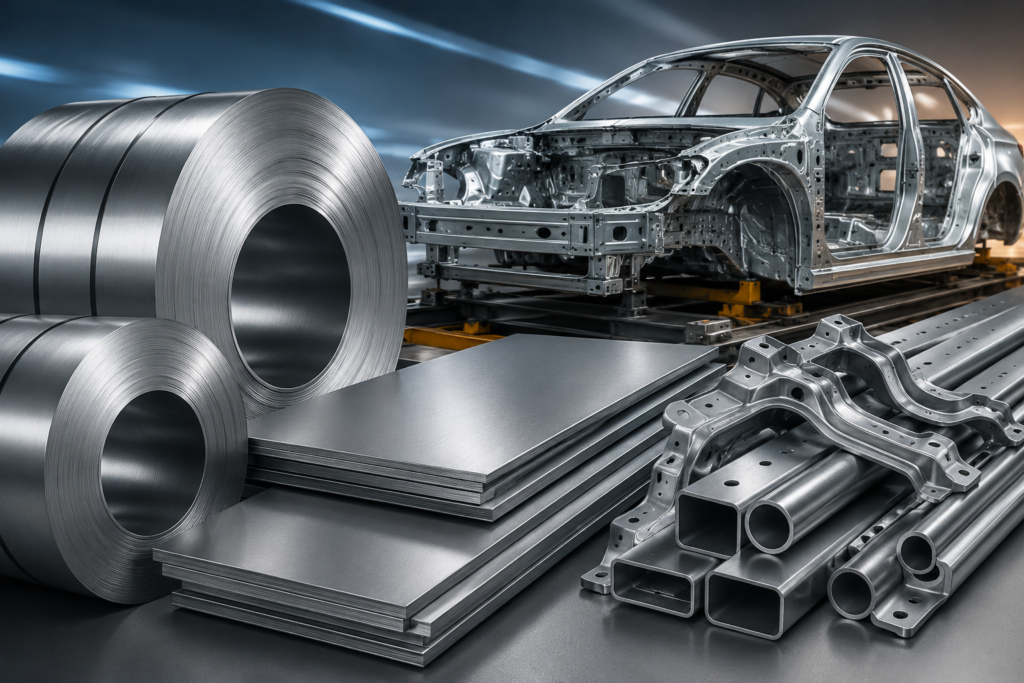
Round and shaped pipes are used in chassis-related components, body frames, and support structures, including applications such as roll cages and other vehicle sub-assemblies where consistent wall thickness supports welding quality.
Construction and Infrastructure
Steel pipes appear in railings, gates, scaffolding-related structures, and other structural components used across residential and commercial construction. CRC square tubes and round pipes are commonly used for gates, grills, and support structures where a clean finish is visible in the final installation.
CRC Pipes vs. Other Steel Pipes
Choosing between CRC pipes and other steel pipe options depends on what the application demands. Neither is a universal replacement for the other.
| Factor | CRC Pipes | Other Steel Pipe Options (e.g., Hot Rolled) |
| Surface Finish | Smooth, consistent finish suited to visible or coated components | Generally rougher, may need additional finishing |
| Dimensional Accuracy | Tighter tolerances due to cold rolling process | Wider tolerances, acceptable for less precision-sensitive work |
| Fabrication | Predictable welding and bending due to uniform wall thickness | Workable, but variation in thickness can affect consistency |
| Typical Applications | Furniture, fabrication, engineering components, automotive parts | Heavy structural work, larger-diameter structural pipes |
| Best Use Case | Applications needing surface quality and dimensional precision | Applications prioritizing bulk strength over surface finish |
The correct choice depends on the application’s technical requirements, not on one product being categorically better than the other.
What to Check Before Buying Steel Pipes
A practical buyer’s checklist helps avoid costly mismatches between what is ordered and what the job actually needs.
- Diameter or outside dimensions: Must match design drawings and fit with connecting components.
- Wall thickness: Directly affects load-bearing capacity and weight; thinner walls reduce cost but also reduce strength.
- Length: Standard or cut-to-size lengths affect wastage and handling.
- Steel grade: Determines strength, weldability, and suitability for the operating environment.
- Surface finish: Matters for coating, painting, or visible applications.
- Dimensional tolerances: Critical for parts that need to fit precisely with other components.
- Required quantity: Affects pricing, lead time, and whether a supplier can fulfill the order in one batch.
- Application: Clarifies whether the pipe needs to handle static load, dynamic load, or purely cosmetic use.
- Welding and fabrication requirements: Some grades and wall thicknesses weld more predictably than others.
- Applicable standards: Confirms the pipe meets recognized specifications for the intended use.
- Quality documentation: Test certificates or material traceability may be needed for certain projects.
- Delivery requirements: Timelines and packaging affect project scheduling.
- Supplier reliability: Consistency across repeat orders avoids production delays.
Each of these factors interacts with the others — for instance, a longer length combined with a thinner wall may need extra handling care during transport and fabrication.
How to Choose a Reliable Industrial Steel Supplier
A supplier’s reliability affects project timelines as much as the product specification does. When evaluating an industrial steel pipe supplier, buyers should look at:
- Whether product specifications are clearly stated and consistently met batch after batch.
- Availability of the specific pipe types, sizes, and grades needed for ongoing or repeat orders.
- Transparent communication about lead times, pricing, and any changes to availability.
- Technical understanding of how different pipe types perform in different applications.
- Proper documentation and quality checks accompanying each order.
- Delivery capability that matches the buyer’s project schedule.
- Responsive customer support for queries or adjustments.
- Willingness to accommodate customized dimensional or quantity requirements.
Vardhman Steel Tubes, based in Ghaziabad, Uttar Pradesh, supplies and trades CRC pipes, CRC tubes, CRC sheets, square tubes, round pipes, and oval pipes for industrial and commercial requirements. As an industrial steel supplier working across construction, fabrication, engineering, and automotive-related applications, the focus stays on matching product specifications to what each buyer’s project actually needs, rather than pushing a one-size-fits-all product.
Common Buying Mistakes to Avoid
Several recurring mistakes lead to project delays or unusable material:
- Choosing only based on price, without checking whether the grade and thickness meet the application’s needs.
- Ignoring wall thickness, which has a direct impact on load capacity and can’t be judged by outer diameter alone.
- Not specifying the application clearly to the supplier, which can result in a pipe that technically matches dimensions but not performance needs.
- Failing to confirm exact dimensions before large orders, leading to fitment problems during fabrication.
- Overlooking surface finish requirements, especially for visible or coated components.
- Not checking supplier consistency across previous orders or references.
- Ordering without confirming delivery requirements, which can disrupt project schedules.
Practical Buying Example
Consider a fabrication workshop building furniture frames that will be powder-coated. The workshop needs a pipe with a smooth outer surface for good coating adhesion, consistent wall thickness for predictable welding at joints, and moderate strength since the frames won’t bear heavy structural loads. In this case, a cold rolled CRC round or square pipe in a lighter wall thickness is likely to be more suitable than a hot rolled pipe, since the surface finish and dimensional consistency matter more here than raw load-bearing capacity. The workshop would confirm the outer dimension against its design, the wall thickness against expected load, and request a sample batch before committing to a bulk order — a step that helps catch any mismatch early rather than after fabrication has started.
Industry Trends
Industrial buyers are increasingly paying closer attention to material efficiency, choosing pipe dimensions and wall thickness that meet the job without over-specifying and adding cost. Dimensional consistency is also a growing priority, since it reduces rework during fabrication and supports faster production cycles. On the sourcing side, buyers are looking for reliable, repeatable procurement — suppliers who can deliver the same specification consistently across multiple orders — along with faster turnaround as project timelines tighten. None of this points to a single trend replacing another; rather, buyers are weighing these factors together against their specific project needs.
Why Product-Specific Selection Matters
There is no single “best” steel pipe for every industrial application. The right choice comes from balancing several factors together: the application itself, the required dimensions, material and grade requirements, the fabrication process the pipe will go through, the operating conditions it will face, and the project budget. A pipe that performs well in one context — say, a lightweight fabrication project — may be entirely unsuitable for a heavy structural application, and vice versa. Buyers get the best outcome by working through these factors specifically for their own project rather than defaulting to what worked on an unrelated job.
FAQs
1. What are steel pipes used for in industrial applications?
Industrial steel pipes are used in manufacturing machine components, fabrication of frames and racks, automotive chassis-related parts, and construction elements such as railings, gates, and structural supports. The specific use depends on the pipe’s grade, dimensions, and manufacturing process.
2. How do I choose the right steel pipe for industrial use?
Start by defining the application and the load it needs to handle, then confirm diameter, wall thickness, and steel grade accordingly. Check surface finish requirements if the pipe will be visible or coated, and verify dimensional tolerances if it needs to fit precisely with other parts.
3. Are CRC pipes suitable for fabrication?
Yes, CRC pipes are commonly used in fabrication work because their smooth surface finish and consistent wall thickness make cutting, welding, and bending more predictable. They are widely used for furniture, racks, trolleys, and similar fabricated products.
4. What should I check before buying industrial steel pipes?
Check the diameter, wall thickness, length, steel grade, surface finish, and dimensional tolerances against your application. Also confirm quantity, applicable standards, quality documentation, and the supplier’s ability to meet your delivery timeline.
5. How do I choose a reliable industrial steel pipe supplier?
Look for a supplier who offers clear product specifications, consistent quality across orders, transparent communication, and proper documentation. Delivery reliability and willingness to accommodate customized requirements are also important factors in a long-term supplier relationship.
Conclusion
Buying steel pipes for industrial use comes down to matching the product to the job. Application requirements, dimensions, material grade, surface finish, and quality documentation all play a role in whether a pipe performs as expected once it’s in use. Working through this checklist before placing an order — rather than after receiving the material — helps avoid rework, wasted material, and project delays. Equally, choosing a supplier who understands these technical details and can deliver consistently matters as much as the specification itself.
Contact Us
Looking for the right steel pipes for your industrial, fabrication, construction, automotive, or engineering requirements? Contact Vardhman Steel Tubes to discuss your specifications and product requirements. Call now, request product information, or visit vardhmansteeltubes.in for further assistance.
Visit site:- https://vardhmansteeltubes.in/
Call: +91-9811690433, +91-9891999139
Email: vstamit.139@gmail.com
Address: Plot No. 139, Gate No. 1, Metro Pillar 167, Prakash Industrial Estate, Sahibabad, Ghaziabad (UP)