About the Author
Amit, Founder, Vardhman Steel Tubes
Amit is the founder of Vardhman Steel Tubes, a trusted CRC steel products supplier based in Delhi NCR. With years of hands-on experience in sourcing, processing, and supplying CRC and steel tube products to industries such as automotive, construction, and appliances, he writes to help buyers and businesses make informed, practical decisions — backed by real industry knowledge rather than textbook theory.
Ever picked up a steel sheet at a fabrication shop and wondered why it felt so smooth and precise compared to the rough, scaly one sitting right next to it? That’s usually the difference between hot rolled and cold rolled steel — and it’s a distinction that matters a lot more than most buyers realise until they’ve ordered the wrong material for a job.
If you’ve been searching for information on CRC Steel Products India, chances are you’re either sourcing material for a manufacturing unit, comparing suppliers, or simply trying to understand what CRC steel actually is before you place an order. This guide breaks it all down in plain language — no jargon overload, just the practical knowledge you need to make a confident, informed decision.
What Exactly is CRC Steel?
CRC stands for Cold Rolled Coil (or Cold Rolled Coil steel). It starts life as hot rolled steel, which is then cooled to room temperature and passed through rollers again — this time without reheating. This “cold” processing gives the steel a much smoother finish, tighter dimensional tolerance, and improved mechanical properties compared to its hot rolled counterpart.
Think of it like the difference between a rough first draft and a polished final version. Hot rolling gets the basic shape and strength in place; cold rolling refines it into something precise, consistent, and ready for high-quality applications.
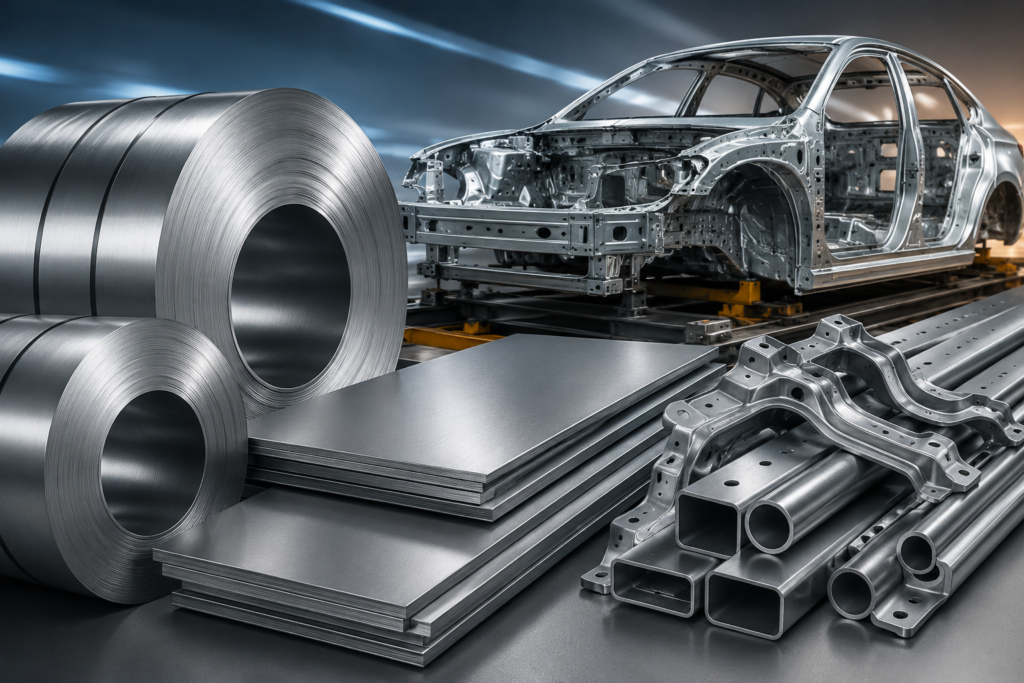
In India, CRC steel is a backbone material for industries ranging from automobiles and appliances to construction and furniture. Because of its clean surface finish and accuracy, it’s often the preferred choice wherever appearance and dimensional precision matter as much as strength.
CRC vs HRC: What’s the Real Difference?
This is probably the most common question we get from first-time buyers. Here’s a quick side-by-side look to clear the confusion.
CRC vs HRC — Quick Comparison
| Parameter | Cold Rolled Coil (CRC) | Hot Rolled Coil (HRC) |
| Surface Finish | Smooth, clean, shiny | Rough, scaly texture |
| Dimensional Accuracy | High precision, tight tolerance | Lower precision, wider tolerance |
| Thickness Range | Thinner gauges (up to ~3mm typically) | Can go much thicker |
| Cost | Higher (extra processing involved) | Lower |
| Common Uses | Appliances, automotive panels, furniture | Structural work, pipes, heavy fabrication |
Note: Choose CRC when finish and precision matter; choose HRC when raw strength and cost-efficiency are the priority.
Why CRC Steel Products Matter for Indian Industries
India’s manufacturing sector — from auto ancillaries in Pune to appliance makers in the NCR belt — depends heavily on consistent, high-quality CRC steel. A slight variation in thickness or surface quality can throw off an entire production line, which is why sourcing from a reliable CRC Steel Products Supplier isn’t just a formality — it’s a business-critical decision.
What CRC Steel Offers | Why It Matters
| Feature | Why It Matters |
| Smooth Surface Finish | Ideal for painting, coating, and visible components |
| Tight Tolerances | Reduces rework and ensures parts fit as designed |
| Better Formability | Easier to bend, press, and shape without cracking |
| Improved Strength-to-Weight Ratio | Useful in automotive and appliance panels |
| Consistent Thickness | Critical for precision engineering and tube-making |
These properties explain why CRC is the go-to choice across appliance manufacturing, auto body panels, and precision tube production.
How CRC Steel Is Made: A Simple Step-by-Step Look
You don’t need an engineering degree to understand the process — here’s the journey from raw steel to a finished CRC coil, broken into simple steps.
CRC Manufacturing Process
| Step | What Happens |
| 1. Pickling | Hot rolled coil is treated in an acid bath to remove surface scale and impurities |
| 2. Cold Rolling | The cleaned coil is passed through rollers at room temperature to reduce thickness |
| 3. Annealing | The steel is heat-treated to relieve internal stress and restore ductility |
| 4. Temper Rolling | A final light rolling pass improves flatness and surface texture |
| 5. Cutting & Coiling | The finished sheet is slit, cut to size, or coiled for dispatch |
Each stage directly affects the final quality — which is why process control at the mill matters just as much as the raw material itself.
Where CRC Steel Products Are Commonly Used
- Automotive Industry: Body panels, chassis components, and structural parts
- Home Appliances: Refrigerator bodies, washing machine drums, and panels
- Furniture Manufacturing: Steel cabinets, racks, and modular furniture
- Construction: Roofing sheets, door frames, and interior fittings
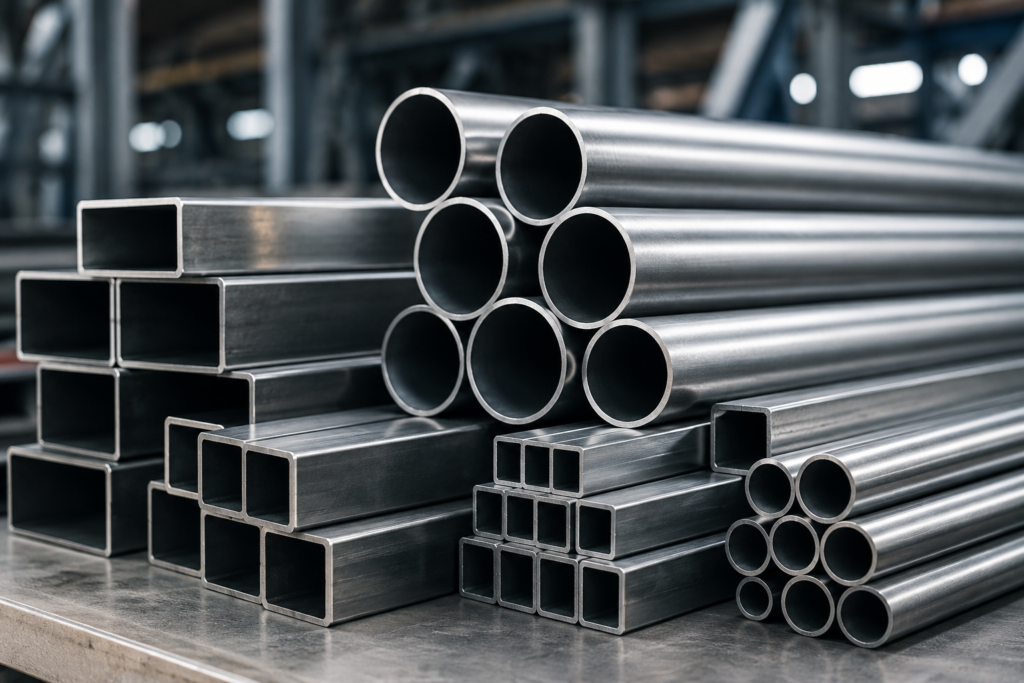
- Pipes and Tubes: Precision tubes for engineering and infrastructure use
A Practical Buying Guide for CRC Steel in India
Sourcing CRC steel isn’t just about comparing price per kg. A few checks upfront can save you from costly returns, production delays, or quality disputes later.
Buying Guide Checklist
| Checklist Item | Why You Should Check It |
| Grade & Specification | Confirms suitability for your application (e.g., IS 513 standards) |
| Thickness Tolerance | Ensures consistency across the entire coil, not just samples |
| Surface Finish Grade | Matters for painting, coating, or exposed-part applications |
| Mill Test Certificate (MTC) | Verifies chemical and mechanical properties are as claimed |
| Supplier’s Track Record | Reduces risk of delayed delivery or inconsistent batches |
| Packaging & Coil Handling | Prevents rust, denting, or edge damage during transit |
Keep this checklist handy the next time you’re evaluating quotes from different suppliers — it helps you compare apples to apples.
Tips and Best Practices When Sourcing CRC Steel
- Always ask for a sample coil before committing to a bulk order — surface and thickness are easier to judge in hand.
- Match the grade to your process, not just your budget. A slightly higher grade often reduces wastage during forming.
- Store CRC coils in a dry, covered area — moisture is the fastest way to invite surface rust on cold rolled steel.
- Build a relationship with one or two trusted suppliers rather than constantly switching for marginal price differences.
- Factor in lead time, especially during peak demand seasons when mill allocations tighten up.
Common Mistakes to Avoid
Do’s and Don’ts of Buying CRC Steel
| Do’s | Don’ts |
| Verify the mill test certificate for every batch | Don’t rely solely on verbal assurances from traders |
| Cross-check thickness at multiple points on the coil | Don’t assume the entire coil matches the sample piece |
| Choose suppliers with proper storage facilities | Don’t ignore how the coil was stored before delivery |
| Ask about return or replacement policy upfront | Don’t finalise large orders without a written agreement |
A little diligence at the buying stage prevents most of the quality complaints we hear about in the industry.
Frequently Asked Questions
1. What is the full form of CRC in steel?
CRC stands for Cold Rolled Coil, referring to steel that has been rolled at room temperature after initial hot rolling.
2. Is CRC steel stronger than HRC steel?
CRC steel generally has better surface finish and dimensional accuracy, while HRC often has better raw strength for thicker structural applications. The “better” choice depends on the use case.
3. What thickness range is available in CRC steel sheets?
CRC is typically available from very thin gauges up to around 3mm, though this can vary slightly by manufacturer and mill capacity.
4. How do I identify a reliable CRC Steel Products Supplier in India?
Look for a supplier who provides mill test certificates, has consistent stock availability, offers proper packaging, and has a verifiable track record with other businesses in your sector.
5. Can CRC steel be used outdoors?
CRC steel is not inherently corrosion-resistant, so for outdoor or high-moisture applications, it’s usually galvanized or coated before use.
6. Why is CRC steel more expensive than HRC?
The additional processing steps — pickling, cold rolling, annealing, and temper rolling — add cost, but they also deliver the precision and finish that many industries require.
Final Thoughts
CRC steel might seem like a small technical detail in the bigger picture of manufacturing, but it often makes the difference between a smooth production run and a frustrating one. Understanding what CRC steel is, how it’s made, and what to check before buying puts you in a much stronger position — whether you’re an engineer, a procurement manager, or a business owner sourcing material for the first time.
At Vardhman Steel Tubes, we work with businesses across India to supply consistent, quality-checked CRC steel products backed by proper documentation and reliable delivery. If you’re evaluating a CRC Steel Products Supplier for your next order, we’d be glad to walk you through our specifications and help you find the right fit for your application.
Visit: https://vardhmansteeltubes.in/
Call: +91-9811690433, +91-9891999139
Email: vstamit.139@gmail.com
Address: Plot No. 139, Gate No. 1, Metro Pillar 167, Prakash Industrial Estate, Sahibabad, Ghaziabad (UP)